Project Story
University of Bahrain
バーレーン大学
Yasuhiro ISHINO (Vice Chairman) / Michael THANNER (Vice President) / Kenji MAMIYA (Principal Architect)
石野 靖博 (副会長) / Michael Thanner (副社長執行役員) / 間宮 健二 (PRINCIPAL ARCHITECT)
Beyond Architecture: Designing the Future of a University
建築の枠を超え、大学が進むべき未来を設計。
Bahrain, a nation of more than 30 islands in the Persian Gulf, borders Saudi Arabia and is known as the first oil-producing country in the Middle East. Its capital is Manama, and about 20 km to the south lies the Sakhir district—home to the University of Bahrain. Since 1982, four years before the university was established, TANGE has been responsible for developing the master plan and designing the campus. Ishino, who has been involved since the beginning, reflects: its master planning and campus design. As project leader Ishino recalls: “This work has been more than simply creating a master plan and designing a campus. It has been about designing the very future of the university.”
バーレーンは、ペルシャ湾に浮かぶ 30 以上の島からなる国で、サウジアラビアに隣接し、中東で最初の石油算出国として知られる。首都はマナーマ。そこから南へ20kmほど離れたサキール地区に、バーレーン大学がある。TANGEは、大学設立4年前の1982年より現在までマスタープランの計画・キャンパスの設計を担当。当初よりこのプロジェクトに取り組んできた石野は語る。「それは大学のマスタープランの計画・キャンパスの設計という範疇を超え、大学が進むべき未来を設計することでもありました」
letter that sparked a 40-year project
継続的に取り組まれてきたキャンパスプロジェクトは、1本のレターからはじまった。
Over the years, TANGE has worked on numerous university campuses in countries such as Algeria and Jordan. Perhaps in recognition of this track record, a letter arrived in 1982: “Would you design the campus for a new university in Bahrain?” That single letter marked the beginning of a campus project that would span more than 40 years. Ishino remembers what he felt at the time:
“The request was for Bahrain’s only national university, which meant our work would be tied to developing the human resources that would shape the country’s future. I remember feeling both a deep sense of purpose and a heavy responsibility. When we first visited the site, it was desert land on the outskirts of the city—now it’s an oasis-like green area. At the same time, Bahrain struck us as an open and internationally minded country, having been the first in the Middle East to produce oil and engage in foreign trade. We sensed this was a place where we could do meaningful work. Of course, at that time, we never imagined this project would continue for more than 40 years.”
TANGEではこれまで、アルジェリアやヨルダンをはじめとする様々な国で多くの大学キャンパスの仕事に携わってきた。そのような実績を評価してくださったのか、1982年1通のレターが届いた。「バーレーンに新しくできる大学のキャンパスを設計してくれませんか」。それが、40年という長期にわたるキャンパスプロジェクトのはじまりだった。石野はその時抱いた想いを語る。「その依頼は、バーレーンで唯一の国立大学にまつわるもので、私どもの仕事は言うならば、バーレーンの未来を担う人材育成に関わるもの。大きなやりがいと共に責任や使命感を抱いたことを覚えています。現地に行ってみると、現在はオアシスのような緑のある場所ですが、当時は都市のはずれの砂漠地帯でした。その一方で、中東で最初に石油を産出し外国と交易を行うことにより培われた国際感覚にあふれたオープンな国柄に触れ、ここなら良い仕事ができそうだ、と感じました。もちろんその時は、まさかこのプロジェクトがその後、40年以上も続くことになろうとは思ってもいませんでした」
Updating the Master Plan every decade—capturing each moment to shape the university of the future
10年ごとにマスタープランを更新。その時々で状況の変化を見据えた、将来の大学像を具現化する。
At TANGE, we work under the concept that “architecture grows.” Following this concept, we design with the university’s long-term growth in mind, shaping each plan around a vision of what the institution should become. This vision is embodied in the master plan—a framework that takes into account the university’s future development, allowing the campus to evolve in step with changing needs. Below, Ishino outlines the master plans developed to date.
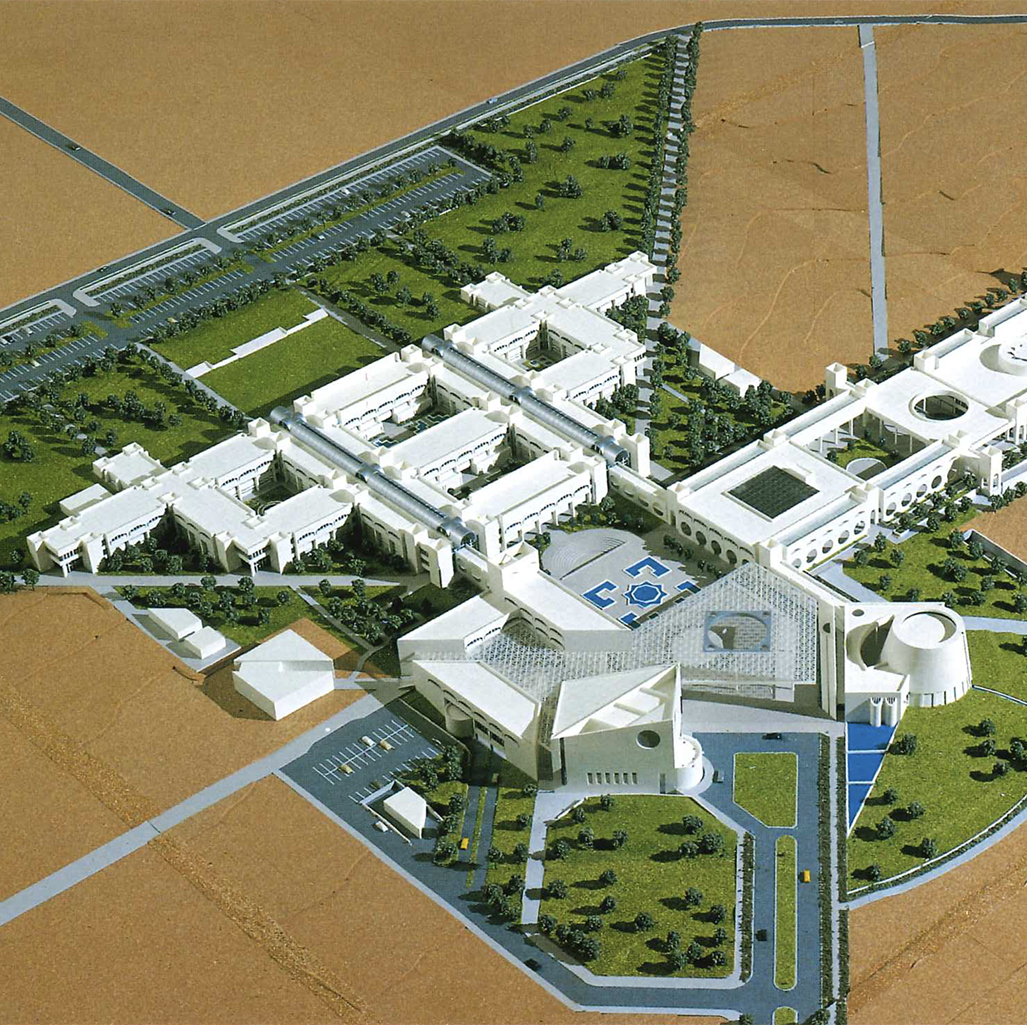
1982 – Original Master Plan
A plan for a 2 km² site designed to accommodate 8,000 students. Flexibility was key, allowing for expansion as enrollment grew and ensuring functional connections among facilities. The proposal centered on two main circulation spines, with clear zoning for different uses to establish a system that could grow over time.
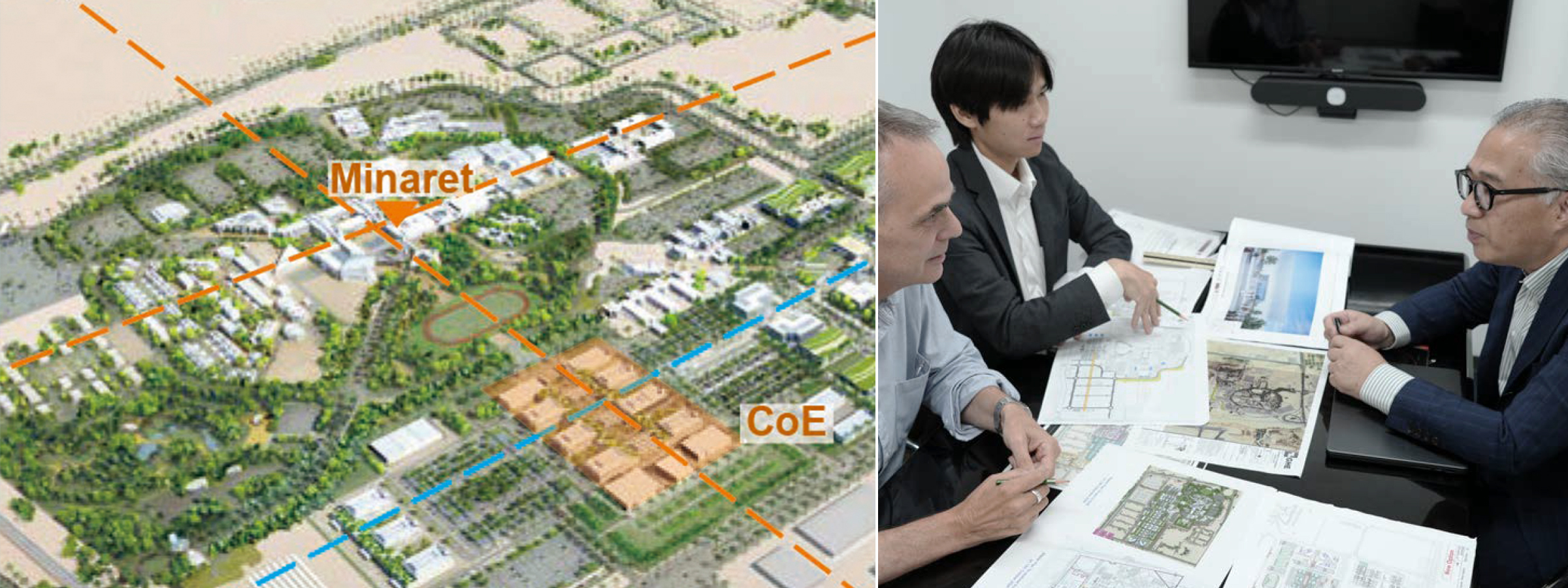
2009 – Master Plan Expansion
Between 1986 and 2008, several new facilities were added, and student enrollment rose to 12,000. At the same time, the Bahrain International Circuit opened to the south of the site. In response to this growth and the changing surroundings, we expanded the original plan, carrying forward its principles. The Faculty of Engineering became the focal point of the expansion, carefully aligned with the existing twin spines to maintain coherence with the original layout.
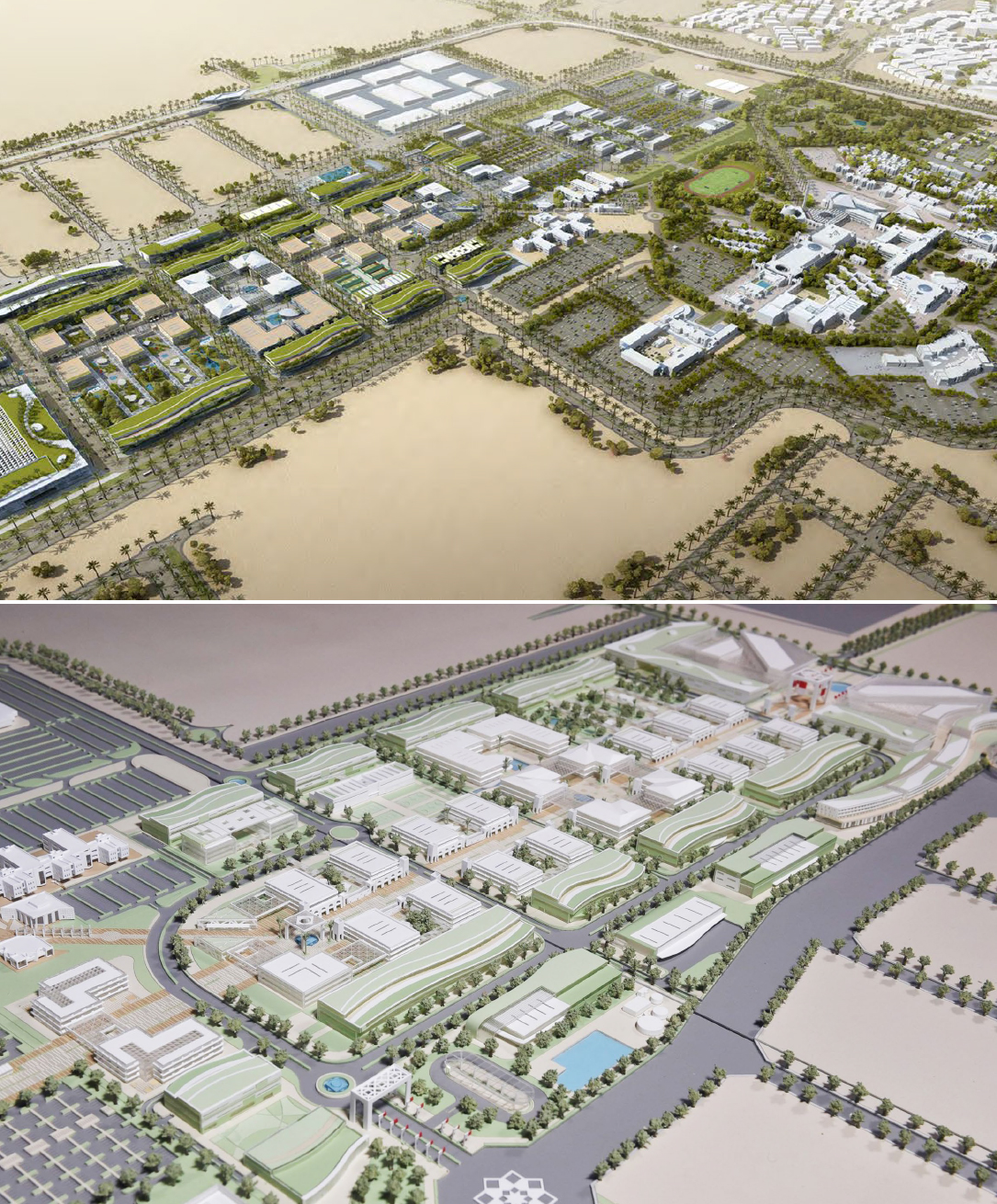
2018 – Master Plan Update
Michael, who developed this third plan, recalls: “By 2018—nine years after the 2009 expansion—the student population had grown to 28,000. Meanwhile, the surrounding area was transforming: a new LRT line, improved road networks, and a sports city were emerging. At the same time, land available for campus expansion was shrinking. Anticipating these changes, we updated the master plan to ensure the university could continue to grow within these new conditions.”
TANGEでは「建築は成長する」というコンセプトのもと、将来にわたる大学の成長を想定しその大学像をもとに設計を行う。これがマスタープランと呼ばれるもので、この計画に合わせてキャンパスが生まれ変わっていく。ここからは、石野がこれまで策定してきたマスタープランを時系列で紹介。
①1982年:オリジナルマスタープラン
2km四方の敷地に8,000名の学生の収容を想定したプラン。
学生の増加に合わせることが可能な柔軟な拡張、施設の機能的な連携を考慮し、「2本の軸線(スパイン)」を核としたマスタープランを提案しました。用途ごとのゾーニングを明確にすることで、拡張可能な動線システムを確立しています。
②2009年:マスタープラン拡張計画
1986年から2008年にかけて、いくつもの新施設が建設され、学生数も12,000名に増加し、敷地の南側にはバーレーン・インターナショナル・サーキットが誕生。そんな周辺環境の変化と大学の成長を踏まえ、オリジナルマスタープランを継承しながら、マスタープランの拡張計画を果たしました。マスタープラン拡張計画の中心的存在となる工学部は、既存の「2本の軸線」との調和を図りながら、オリジナルマスタープランとの整合性を保つよう配置するようにしました。
③2018年:マスタープランの更新
3回目のマスタープランを策定したMichaelは言う。「2009年のマスタープラン拡張計画から9年が経過し、学生数は28,000名に増加しました。さらに、周辺のLRTの出現、道路ネットワークの整備、スポーツシティの誕生に合わせて、大学拡張のための予定敷地が縮小していくことに。そんな環境の変化を先取りし、マスタープランをアップデートしました。
Updating as needed—earning trust over 40 years
状況に応じた最適なアップデートを行う。その評価が、40年という歳月に。
Ishino, who has led the master plan updates as project leader, reflects on why the project has continued for four decades:
“From the beginning, we envisioned the University of Bahrain as an ‘Academy with an Oasis’—a campus where city, architecture, and people (students) come together in harmony. Guided by the two expandable circulation systems defined in the original master plan, we have been able to update and adapt to each era’s needs without losing sight of the original vision. I believe it is this unwavering stance and consistency in our proposals that have allowed us to remain in charge of the design for 40 years.”
プロジェクトリーダーとしてマスタープランの更新に取り組んできた石野は、プロジェクトが40年続いてきた理由を解き明かす。「私たちは、オリジナルマスタープランに掲げられた拡張可能な2本の動線システムに基づいて、都市と建築、そして人(学生)が調和を図る『オアシスを内包する学び舎(Academy with Oasis)』という環境を創出。その時々に応じた大学像をマスタープランとして具現化してきました。決してブレることのない姿勢と提案が、40年にわたって設計を担当してこられた理由だと考えます」
Designing for Comfort—both physical and cultural
ハードとソフトの両面からココチ良いキャンパスライフをサポート。
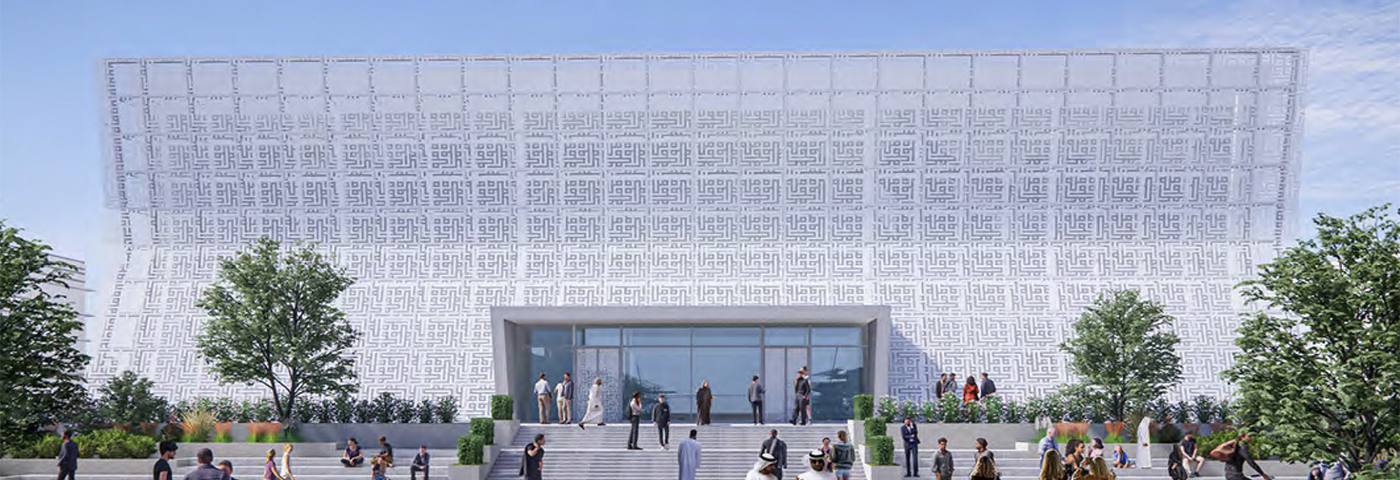
One of TANGE’s guiding principles is “From Form to Comfort.” Beyond creating striking architecture, the goal is to design spaces where people feel at ease. At the core of this principle is the idea of prioritizing comfort—often by incorporating the unique character of a place into the design.
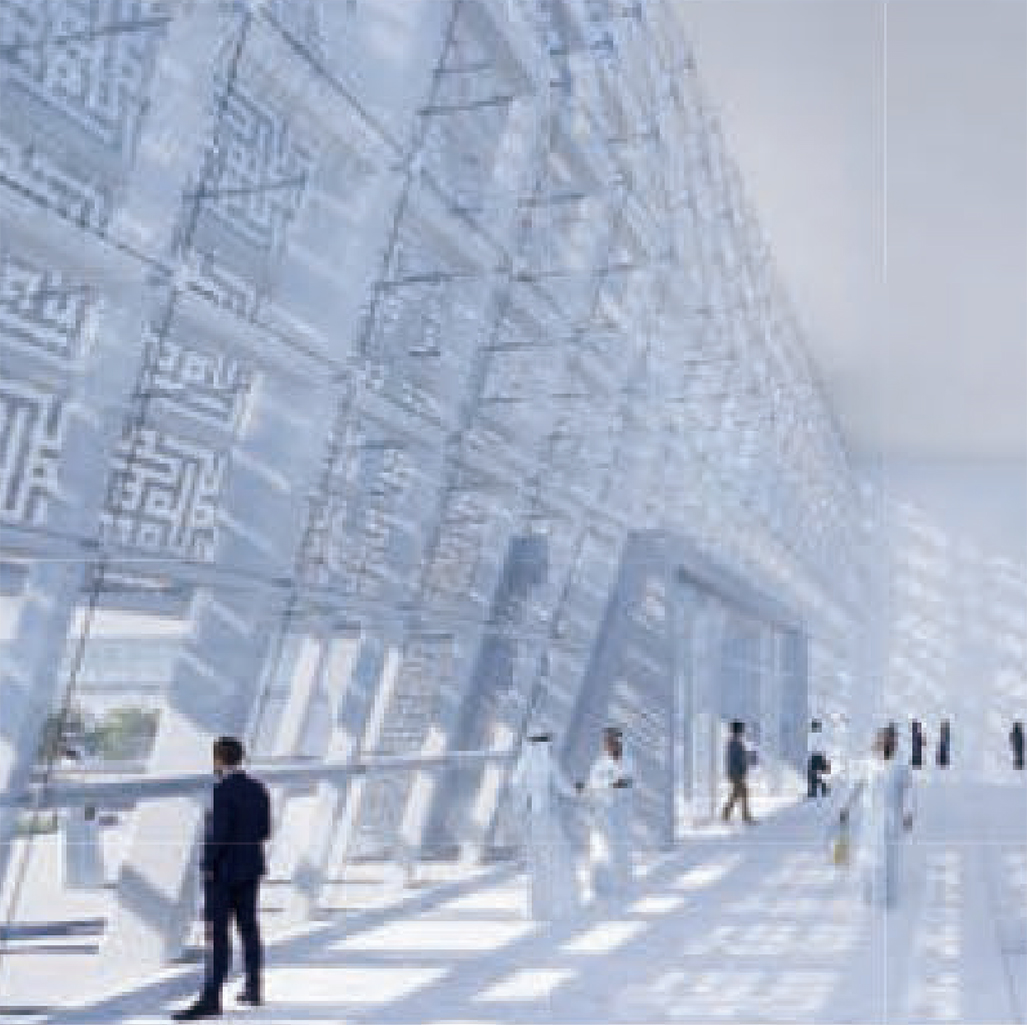
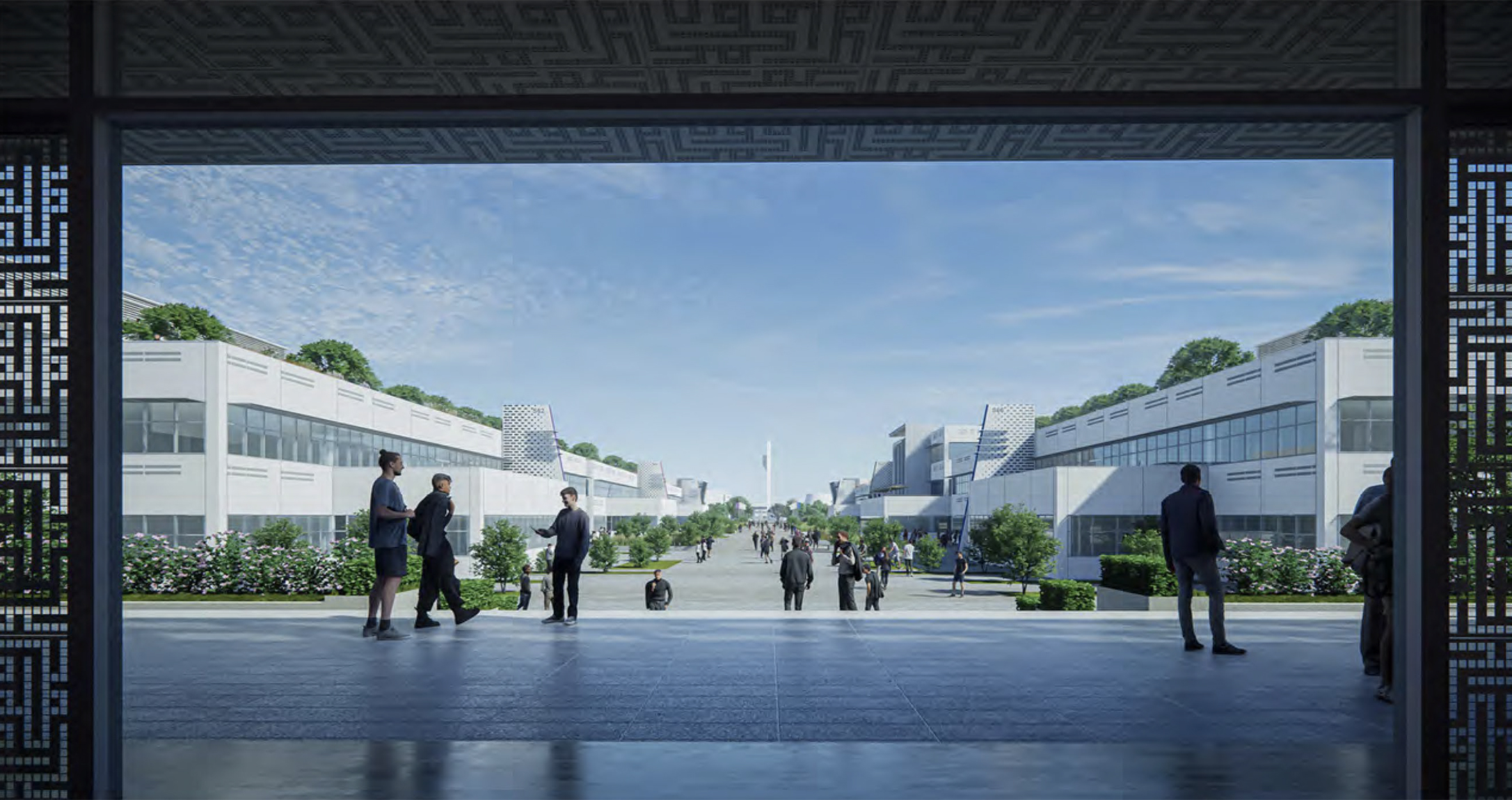
At the University of Bahrain, this has meant planning façades and colonnades inspired by the region’s distinctive cultural and geometric motifs. t the University of Bahrain, this is expressed through facades and colonnades inspired by local geometric motifs—embedding cultural identity into the student experience.
Current project leader Mamiya says:
“By integrating the identity of this place, we hope students will feel at ease, enjoy their time here, and carry those happy memories with them. Ultimately, we want them to take pride in what they learned at this university as they move on into society. That’s the scenario we envision.”
This approach also reflects ideas long rooted in TANGE since its founding: how to reinterpret tradition in a contemporary way and carry it forward, and the belief that architecture is a service. Both philosophies are alive here in Bahrain, supporting students through a campus designed with care.
TANGEを貫く考えのひとつに「カタチ、そしてココチへ」というものがある。これは、使
う人にとって気持ちの良い空間の実現をめざすもので、そのひとつにはその土地ならではの個性を取り入れることで、心地よさを最優先したデザインを創ろうというもの。バーレーン大学では、その地域の文化的で特徴的な幾何学模様をモチーフとしたファサードやコロネード(柱廊)を計画。「この地のアイデンティティを取り入れることで、学生が心地よく過ごせ、その楽しさが思い出となり、やがてこの大学で学んだことを誇りに思って社会に巣立って行ってもらえたら。そんなシナリオを描いています」
こう話すのは、現在のプロジェクトリーダーである間宮。設立当時から受け継がれてきた「伝統をいかに現代的に解釈し未来へと継承するか」、そして「建築はサービス業である」というTANGEに息づく考えも、学生をやさしく支えるキャンパスとして、ここバーレーンで活かされている。
This project may never truly end—and that is very much the TANGE way
このプロジェクトには終わりがないのかもしれない。それは、TANGEらしい仕事のあり方。
“There may be no finish line for the University of Bahrain project,” says Michael. “Right now, we’re working on the latest master plan, and I sometimes wonder whether we’re still designing in line with the original vision. There are moments when I even feel this project might never really have an ending.
But that, I think, is a sign of the trust TANGE has earned. Our role is to draw out what’s in the client’s mind through dialogue and create the best possible solution. Everything is almost tailor-made. It’s because we’ve practiced this approach and continued to offer our best ideas that, even after 40 years, the project hasn’t stopped—it just keeps moving forward. I feel proud to be part of a project that’s been evolving for four decades, and we intend to keep working with the same dedication. One of the key lessons from all these projects has been this: beyond design, you must look to how cities and architecture help shape society. That’s what we’re doing now at the University of Bahrain—designing not just buildings, but the future of the university and contributing to the growth of Bahraini society. In that sense, you could say this is a new form of international contribution, one that goes beyond the boundaries of architecture.”
「バーレーン大学プロジェクトに、ゴールはないのかもしれません」とMichaelは言う。「現在、最新のマスタープランに取り組んでいますが、当初の理念に基づいて計画できているのかと思うことがあります。時々このバーレーン大学のプロジェクトには終わりがないのでは、そんな気がすることさえあります。しかし、それはTANGEの仕事が評価されてきたことの証。クライアントの心の中にあるものを対話を通じて抽出し、最適解を生み出す。すべてがオーダーメイドのようなものです。それを実践し、ベストな提案を続けてきたからこそ、40年という長い歳月が経過しても終わることなく次につながっていくのではないでしょうか。40年間成長を続けるプロジェクトに誇りを感じると同時に、これからも変わらぬ姿勢で取り組んでいくつもりです。また、いくつものプロジェクトを通して学んだことに『デザインの先に、都市と建築による社会づくりを見つめる』があります。それを今、バーレーン大学で実践しています。建築を通じて、大学の未来をデザインし、バーレーンの社会づくりに貢献。それは、建築の枠を超えた国際貢献の新しい形と言ってもいいのかもしれません」
Other Project Stories
-
éclat Club and Resort, Huizhou
エクラットクラブ & リゾート
A Gateway to an Unprecedented Resort Experience
かつてないリゾート体験へのゲート
-

-
University of Bahrain
バーレーン大学
Beyond Architecture: Designing the Future of a University
建築の枠を超え、大学が進むべき未来を設計
-
-
Orchard Gateway
オーチャードゲートウェイ
A bridge for people, a bridge to the next generation
人の架け橋となり、次代への架け橋となる
-

Mode Gakuen Cocoon Tower
モード学園コクーンタワー
A Response to the Request for a Building Like No Other
見たこともない建物を、というオーダーへの回答
-
Yoyogi National Gymnasium
国立代々木競技場(旧国立屋内総合競技場)
Dynamism and integration born of an unprecedented challenge
史上初への挑戦が、ダイナミズムと一体感を生み出した
-
Rikuzentakata City Community Hall
陸前高田市コミュニティホール
Designing hope for recovery and usability
復興の希望と、使い勝手のよさをデザインする