Project Story
Mode Gakuen Cocoon Tower
モード学園コクーンタワー
Masaki Nakayama(Principal Architect)
中山 勝貴 (設計部 設計統括)
Response to the client’s request for a unique building.
求められたのは、今までにない建物。
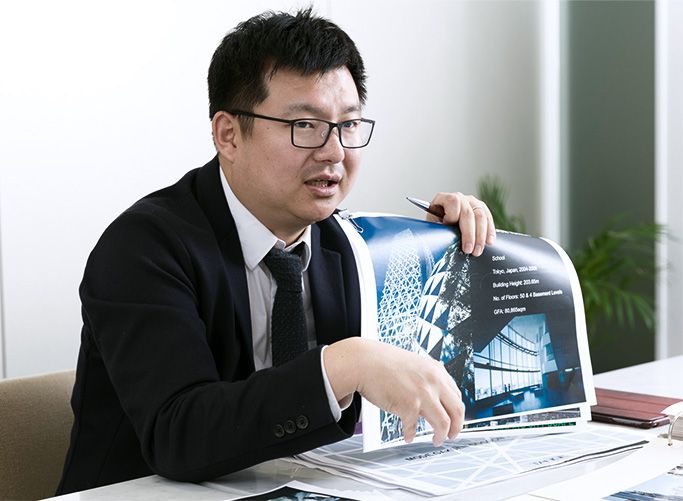
The Mode Gakuen Cocoon Tower project was an open competition. Over 100 proposals from within and outside of Japan were submitted and more than 150 design presentations were made. The design proposal submitted by Tange Associates was selected. Led by Chairman Paul Tange, Principal Architect Masaki Nakayama and his team worked on the proposal. Nakayama says, “The head of Mode Gakuen spoke passionately about how a school is a place that cultivates dreams, so he wanted a building where new dreams can emerge and develop. At the time, I was three years out of graduate school. Five years later, after a process of overcoming various issues related to budget, planning, regulations, and construction, the building was completed. It was possible to get to this point due to Chairman Tange’s leadership and the enthusiasm of the head of Mode Gakuen.”
「モード学園コクーンタワー」のプロジェクトはオープンなコンペティションだった。国内外から100を超える人やチームが参加し、150以上の案がプレゼンされたという。TANGE建築都市設計では丹下憲孝を中心に中山たちが取り組んだ。そしてTANGE建築都市設計の案が採用された。中山は言う。「モード学園の学長はとても情熱のある方で、学校は夢を育む所だから、空間も夢のあるもの、見たことがない建物が欲しいと熱く語るのです。当時、私は大学院を出て3年目。そこから5年。プランニングから施工、規制や予算などさまざまな課題を乗り越える日々でしたが、最後まで完走できたのは丹下憲孝のリーダーシップと学長の熱意があったからに他なりません」
Redefining school architecture: the idea of stacking the school vertically.
校舎を縦に積み上げるという発想。
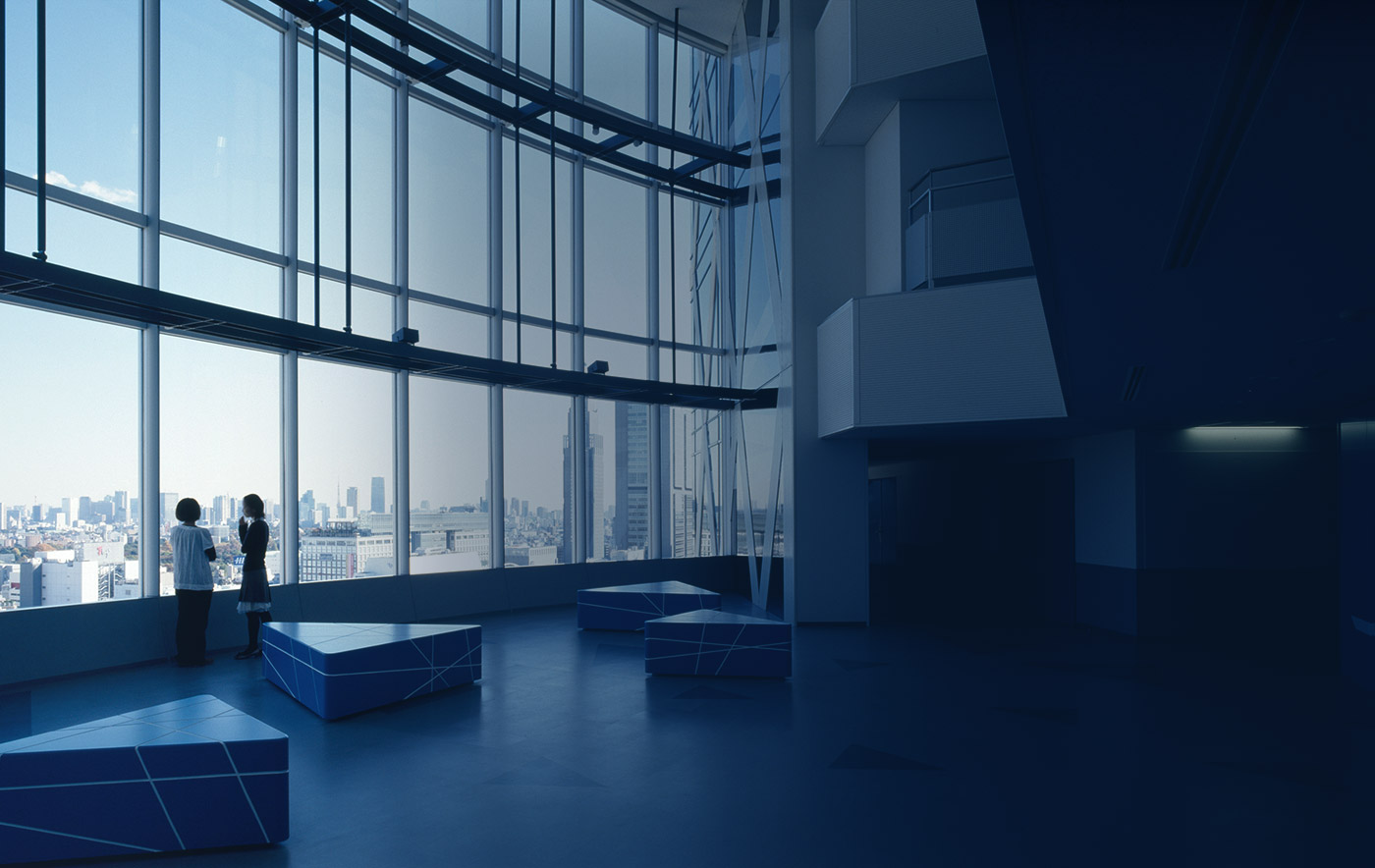
Nakayama explains that there are certain important considerations when Tange Associates designs school buildings. “Of course, classrooms are important in a school, but we believe that the time between classes and after school is also an important part of student life. Anything that happens on campus during these times, such as discussion or chatting, consulting with teachers, or even falling in love, is meaningful to students. However, in contrast to a conventional school that may be three stories, in a high-rise building, students cannot see what is happening on the floors above or below. In a school setting, it is important to be able to move freely between classrooms and to be aware of what is going on around you. So, even though this project was a high-rise building, we designed the entire building as a stacked three-story school.”
学校という建物を設計するにあたり、TANGE建築都市設計が大切に考えていることがあると中山は教えてくれる。「学校なので授業は大切であることはもちろんですが、それ以上に大切なのは休憩時間や放課後の時間というのが私たちの考えです。キャンパスでディスカッションや雑談、先生に相談したり、恋愛があったり、何かが起こることが大切で、だから学生も学校に来る意味がある。しかし高層建築の場合、ひとつ上や下の階では何が起こっているかわかりません。でも学校はどこの教室にも自由に行けることと、何が起こっているかわかることが大切です。昔の小中学校は大抵3階建てでした。だから今回は高層ビルなのだけど、内部は3階建ての校舎を積み上げる設計にしています」
Multiple discussions with Tokyo Metropolitan Government regarding contribution to the urban environment.
都市環境への貢献のために、東京都と協議を重ねる。
As well as being a place of learning, a school is a place that celebrates campus life. However, the obstacle here was the issue of space. It is difficult to find a large site in the city center. Nakayama explains that there was no choice but to compensate for the lack of space with height. “The capacity of the building was 1,000% of the site, but the client’s requirements for classrooms and space for campus events added up to between 1,300% and 1,500% capacity. To be able to accommodate that, we had to build upwards, and, to achieve height, we needed to have regulations relaxed. Tange Associates went to Tokyo Metropolitan Government to apply for the floor area ratio regulation to be relaxed.
“Our proposal explained the ways that the building took social contribution and the environment into consideration. For example, it offers connectivity to Shinjuku’s underground passage, makes an egg-shaped low-rise hall next to the school available for rental by the public, and employs a co-generational heat and cooling system. Further, the proposal noted the revitalization that the young energy of students would bring to the city area. After discussions with Tokyo Metropolitan Government a number of times, Tange Associates was successful in receiving special authorization for 1,370% capacity to secure floor area ratio and height.”
学校とは学び舎であると同時に、キャンパスライフを謳歌する場所でもある。しかしそこで立ちはだかるのが広さの問題。都心の場合、そう広い敷地を望むことはできない。高さでカバーするしかないと中山は説明する。「とはいえ建物の容積は敷地の1,000%です。しかし教室はたくさん欲しい。キャンパス空間も欲しい。そうなると上へ伸ばしていくしかありません。容積も敷地の1,300、1,500%と増やしたくなる。高さを稼ぐためには、規制を緩和してもらう必要があります。私たちは東京都へ赴き、容積率の緩和を願い出ました。新宿の地下街とつながることや、卵のような低層ホールを学生以外の東京都民にも貸し出すこと、コージェネレーションシステムを採用することなど、社会貢献や環境にも配慮した建物であり、さらに学生という若いエネルギーが集まることによる街の活性化など、今一度都市のあり方、街のあり方を提案しました。役所へは何度も通いました。それで最終的に1,370%の特区認定をいただき、容積率、及び高さを確保することができたのです」
From the outside, it looks like an oval cocoon,but inside, three towers are connected.
外から見れば楕円の繭。内は3つの建物がつながっている。
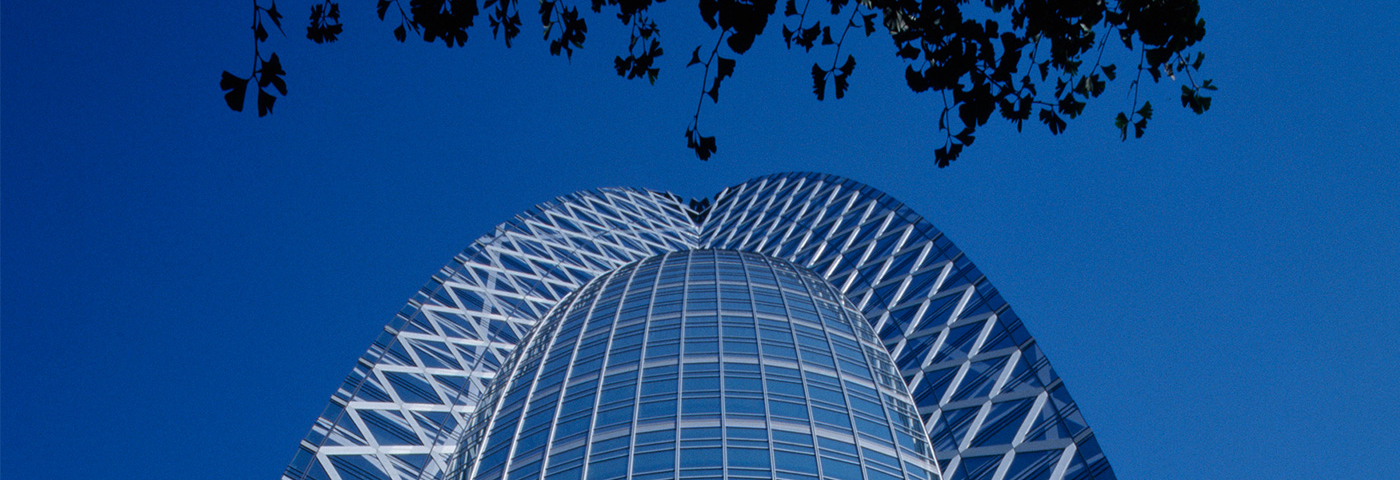
The building’s name contains the English word “cocoon.” Nakayama tells us that the cocoon is both the design concept and also refers to the following idea. “The cocoon wraps itself around a living creature for protection before it begins its activities in the world. Students are in a transition period preparing to go out into the real world of work. So we thought that as a place of learning for young people, a school’s role is like that of a cocoon.
“This idea led to the design for the Mode Gakuen Cocoon Tower. The exterior design is in the image of a cocoon. However, the interior is actually composed of three towers, each of which creates the identity of the three schools, Fashion & Design, Medical Care & Welfare, and Technology & Design. The three towers are not, however, completely independent of each other. The design connects the towers by corridors and creates open spaces that provide visual connectivity and offer places for interaction between students.”
さて、この建物の名称にもなっているコクーンとは繭という英語。繭がデザインのコンセプトにもなっているのだが、繭にはこんな想いが託されていると中山は教えてくれる。「繭はこれから活動を開始しようという生き物を包み込んで保護している状態です。学生はこれから社会へ飛び出す前の人、ならば『これから創造の世界へ飛び出す若者の学び舎』は、まさしく繭ではないか、つまり学校そのものが繭ではないかと考えたのです。そんな想いからデザインされたのが『モード学園コクーンタワー』。外観は繭をイメージしたデザインとなっています。しかしその中は、実は3つのタワーを内包しているのです。それら3つのタワーはファッション、医療、コンピュータという3つの学校のアイデンティティとして表現しており、それらのタワーに学校の主用途となる教室や実習室を配置しています。3つのタワーはそれぞれが独立するのではなく、タワー間を廊下でつなぎ、そのスペースにオープンなキャンパス空間を生み出す設計にしました。私たちは、このタワー間のスペースこそが学校建築にとって重要なスペースと考えたからです」
Novelty and functionality into form.
斬新さと機能性を、フォルムに。
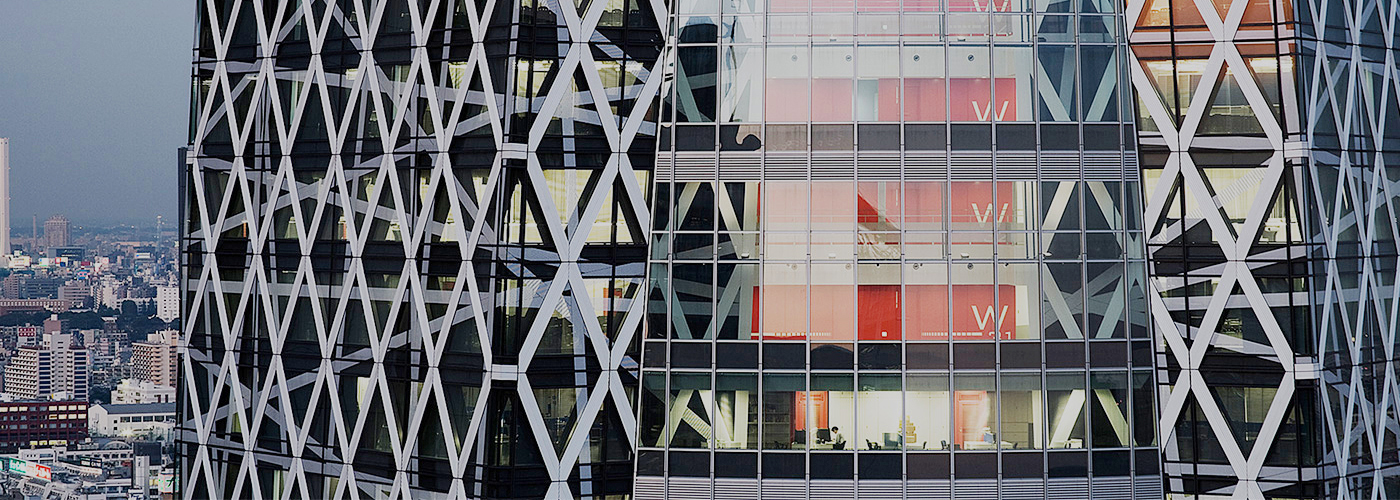
The building’s form is also in the image of a cocoon. “We aimed for novelty and beauty but structurally, it is the form that makes a building stable. First, as it is a small site, we focused on maximizing the amount of greenery at the base. Meanwhile, to fulfill the requirement for many classrooms, we enlarged the middle section. Finally, to enhance the silhouette, we narrowed the building again toward the top. Balancing aesthetics and structure is extremely difficult. We formulated various scenarios in order to achieve the best balance, in terms of the requirements of the school and structure, with the result of the building’s current form. Soon after construction was completed, the Great East Japan Earthquake struck on March 11, 2011. The Shinjuku area was quite badly shaken. It was a slow shake, but the slower the tremors, the more that high-rise buildings shake. However, Mode Gakuen Cocoon Tower shook very little. This is because we had conducted simulations for long-period ground motion earthquakes,” explains Nakayama.
建物のフォルムにも繭がイメージされている。「めざしたのは斬新で美しいけれど、構造的には安定性を兼ね備えているフォルムです。まず足元を絞りました。そうすることにより狭い敷地であっても緑を増やすことができます。一方、教室はたくさん必要なので真ん中は膨らませました。最上階までそのまま膨らんだ状態なら空と建物のシルエットが美しくないので、もう一度絞ったのです。安定性だけを求めると長方形の建築がいいのですが・・・。そのバランスはとても難しい。どのくらい絞るのがベストのバランスを生むのか、プログラム的にも、構造力学的にもさまざまな検討を重ねました。結果として今の形状になったのですが、竣工後に東日本大震災が発生しました。新宿界隈もかなり揺れました。ゆっくりした揺れでしたが、ゆっくりの揺れほど高層ビルはよく揺れるのです。しかし『モード学園コクーンタワー』はほとんど揺れませんでした。長周期地震に関してのシミュレーションもしっかり行っていたからです」と中山は言った。

Overcoming budget limitations by changing the way of thinking.
限りある予算を発想の転換で乗り越える。
In a sense, architecture can be said to be a battle with the budget. Mode Gakuen Cocoon Tower was not an exception. Nakayama comments, “This design presented many challenges at the construction stage. For example, there were more than 200 classrooms half of which were special classrooms. Each had a different design. Besides that, the building cross-section is oval. If we had made the interior floor to floor height the same, the exterior wall lengths would all be different. If the exterior façade of every floor has to be customized, the budget would blow out of proportion. In order to remain within budget, we transitioned to the idea of standardizing the size of the exterior wall panels and instead adjusting the interior height of each floor. Doing this allowed us to contain costs because only the differences in interior finish had to be adjusted. We talked to a number of companies to find one that was enthusiastic to take on the construction challenges. Mode Gakuen Cocoon Tower is the materialization of the passion and enthusiasm of everyone concerned. The client requested a one-of-a-kind school. Our idea was to create architecture that would function as part of the city. The ideas of the construction company and other collaborating partners helped to make these aims a reality. In the end, for Mode Gakuen Cocoon Tower, just as for other projects, it was the ideas of people that started everything. These passions resulted in the creation of a city landmark. It is now an iconic building that represents the urban landscape of Nishi-Shinjuku.”
建築とはある意味、予算との闘いと言える。「モード学園コクーンタワー」の場合も例外ではなかったと中山は打ち明ける。「デザインを実現させるのが実は大変でした。教室を例にとっても200以上あって、その半分以上が特殊教室。部屋のデザインはみんな違うのです。さらにこの建物の断面は楕円形です。各階の高さを同じにすると外装の長さがみんな違ってきます。各階オーダーサイズになると予算は膨大に膨れあがります。限りある予算で実現するためには、外装のサイズは同じにして、各階の高さを調整すればいいのではないかと発想を転換しました。階高を変えるのは内装の仕上げの違いだけなのでそう費用はかさみません。ですからこの建物は各階高さが微妙に違うのです。階段1段の高さも微妙に違います。とはいえそんな建物の施工は想像を絶する手間と苦労がともないます。何社もの建設会社に声をかけました。その中から情熱のある建設会社に出会うことができて、お願いしました。振り返ると想いの結晶がこの『モード学園コクーンタワー』と言えます。学長のどこにもない建物が欲しいという想い。都市の一部として機能する建物を造りたいという私たちの想い。そしてそれらをなんとかカタチにしようという建設会社や協力企業の想い。そんな人の熱い想いが、不可能と思えることも可能へと動かしていく。やはりこの『モード学園コクーンタワー』の場合も、すべての始まりに人の想いがあるのです」 その想いは都市のランドマークというカタチで結実。西新宿を代表する建物としてアーバンデザインの一部を担っている。
Other Project Stories
-
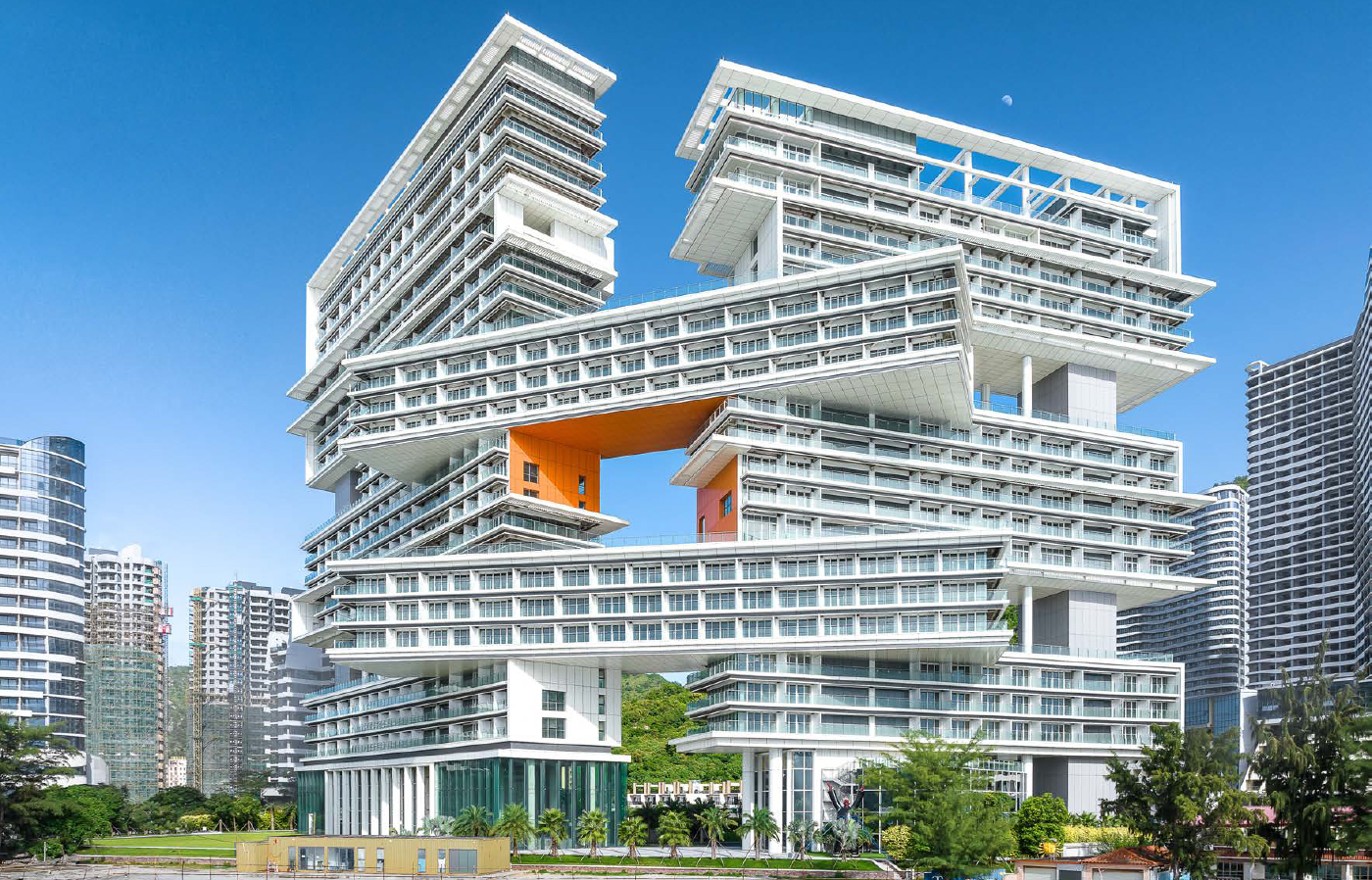
éclat Club and Resort, Huizhou
エクラットクラブ & リゾート
A Gateway to an Unprecedented Resort Experience
かつてないリゾート体験へのゲート
-

-
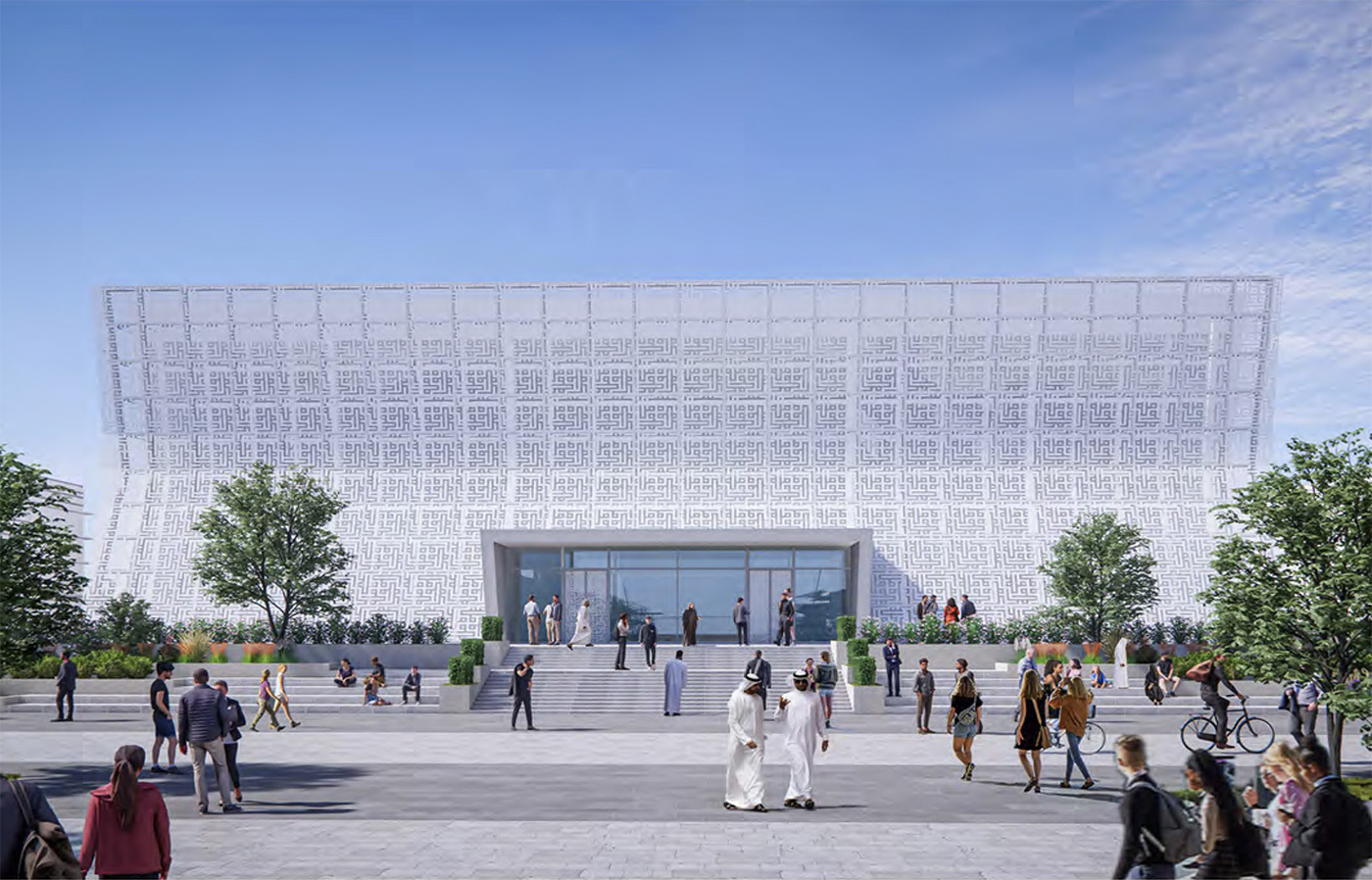
University of Bahrain
バーレーン大学
Beyond Architecture: Designing the Future of a University
建築の枠を超え、大学が進むべき未来を設計
-
-
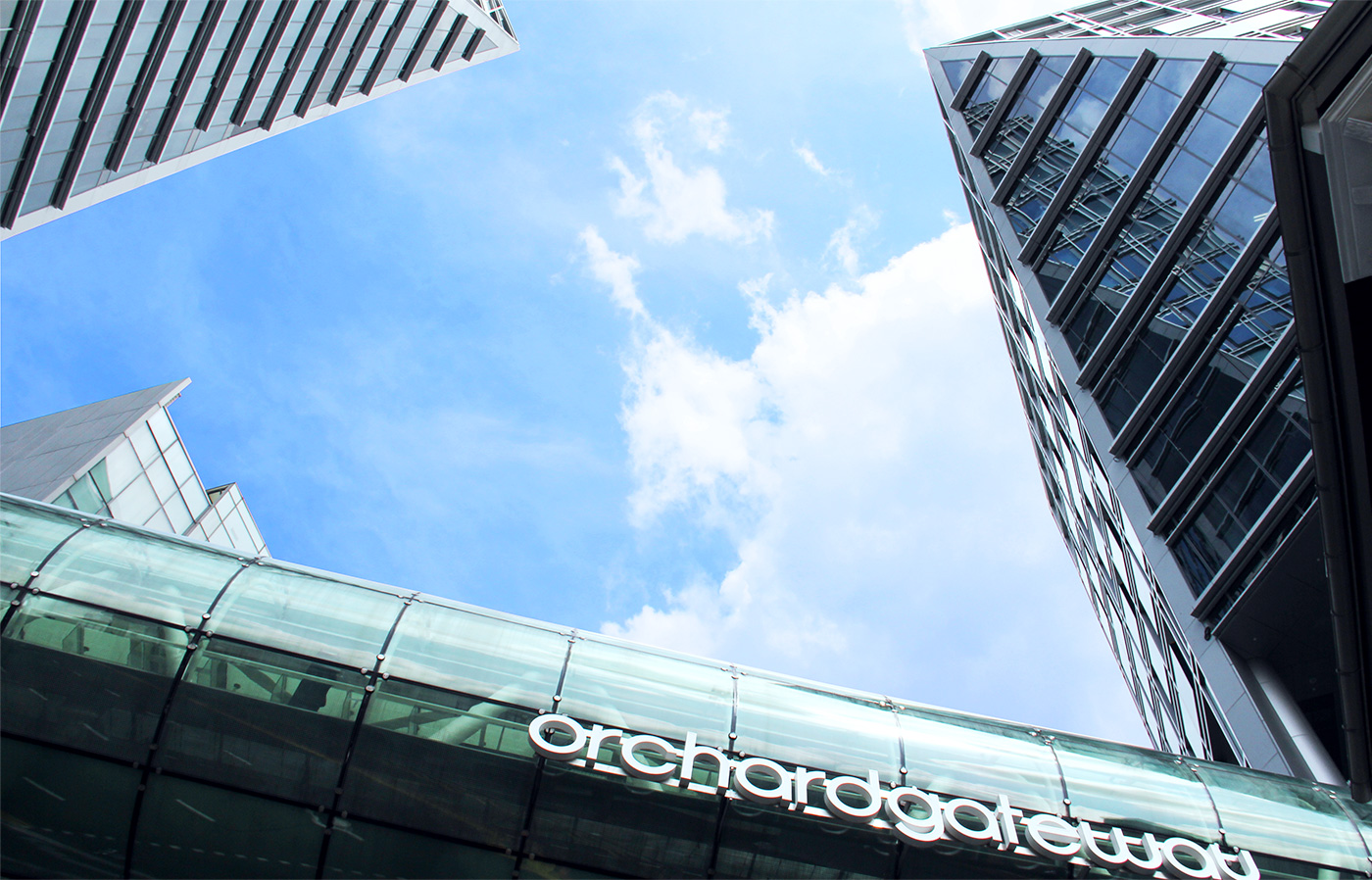
Orchard Gateway
オーチャードゲートウェイ
A bridge for people, a bridge to the next generation
人の架け橋となり、次代への架け橋となる
-

Mode Gakuen Cocoon Tower
モード学園コクーンタワー
A Response to the Request for a Building Like No Other
見たこともない建物を、というオーダーへの回答
-
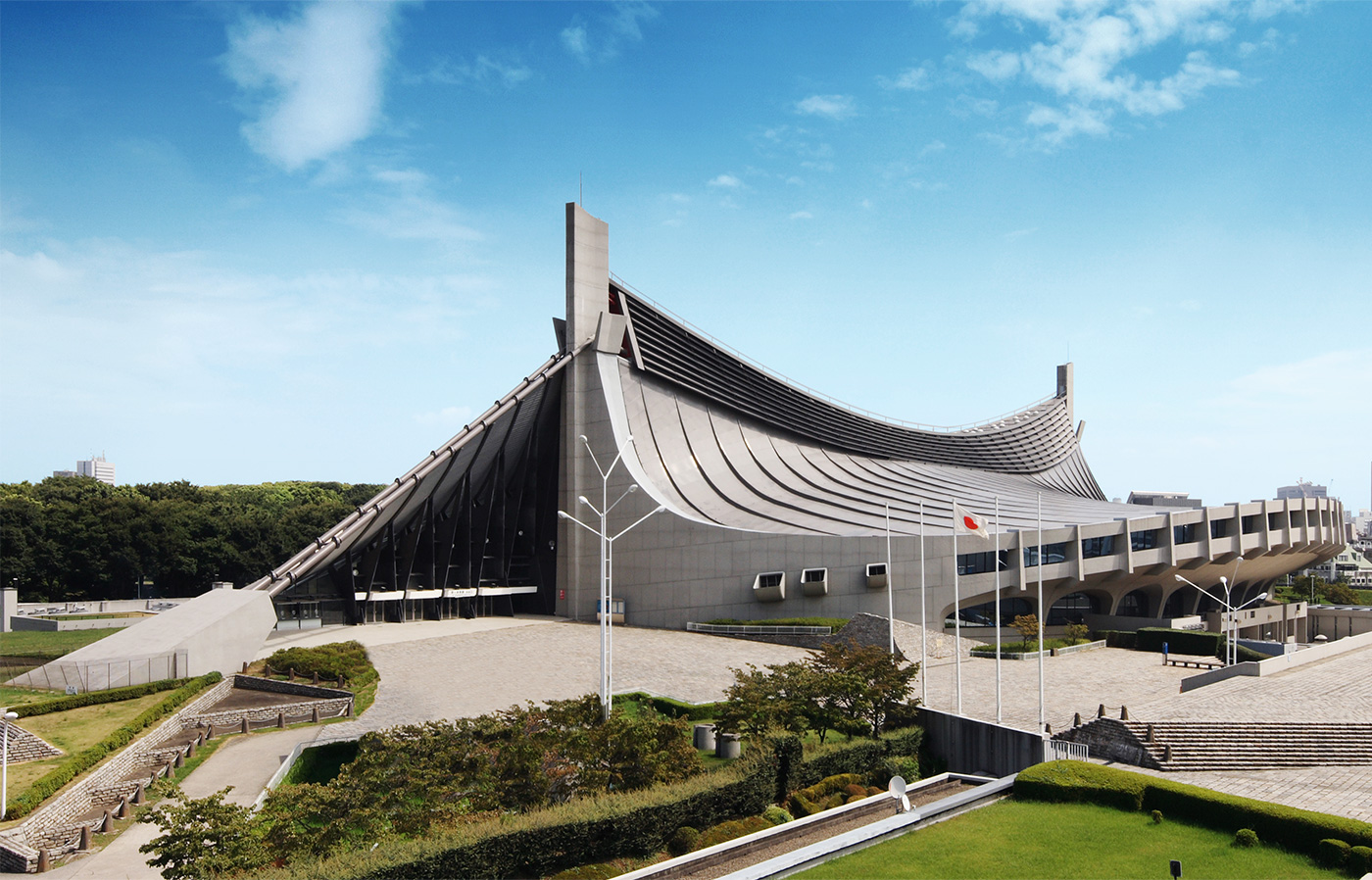
Yoyogi National Gymnasium
国立代々木競技場(旧国立屋内総合競技場)
Dynamism and integration born of an unprecedented challenge
史上初への挑戦が、ダイナミズムと一体感を生み出した
-
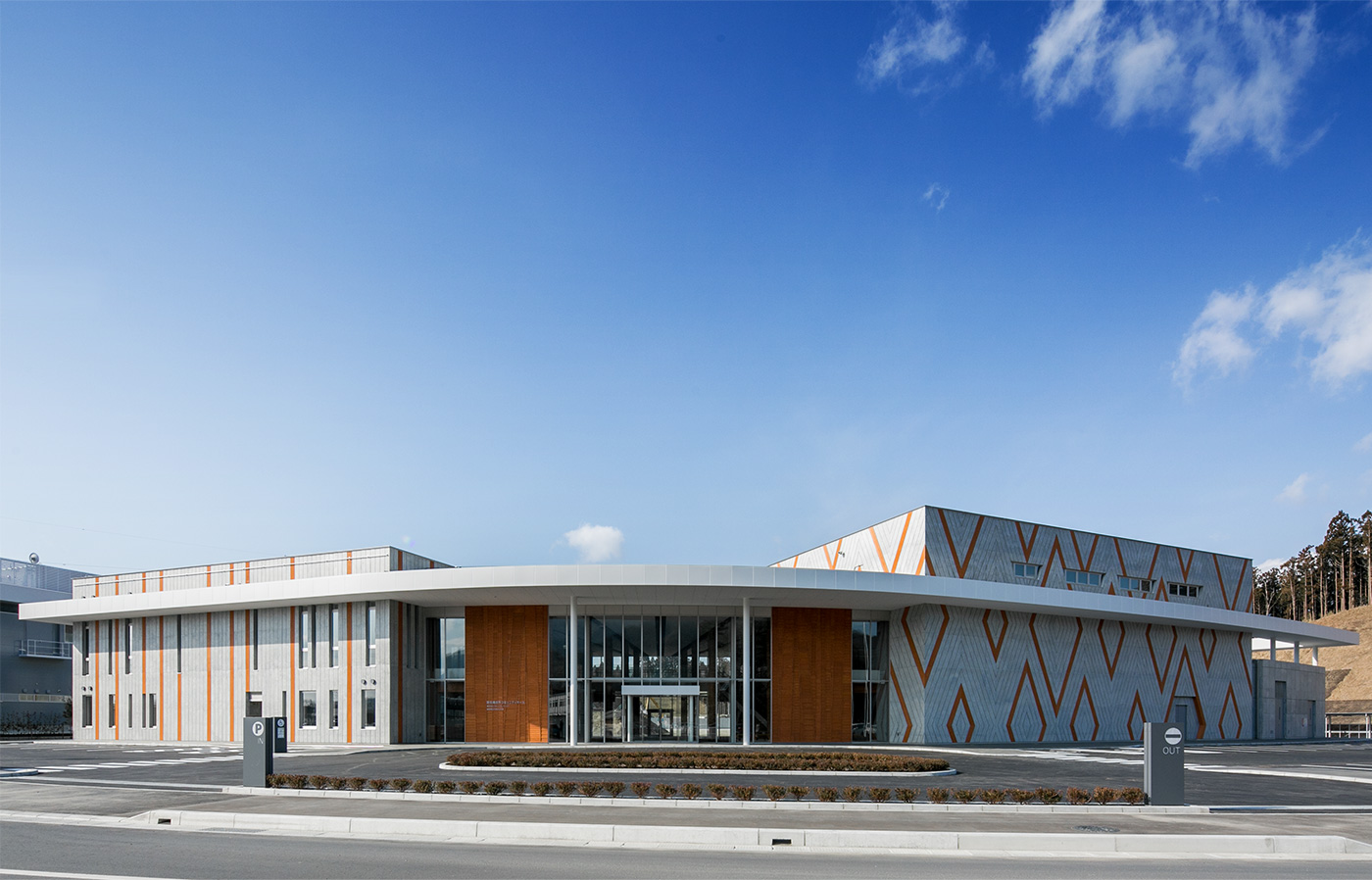
Rikuzentakata City Community Hall
陸前高田市コミュニティホール
Designing hope for recovery and usability
復興の希望と、使い勝手のよさをデザインする