Project Story
Yoyogi National Gymnasium
国立代々木競技場(旧国立屋内総合競技場)
Tomohiro Kimura(Executive Vice President) / Masaki Nakayama(Principal Architect) / Arata Okabe(Architectural Department)
木村 知弘 (副社長) / 中山 勝貴 (設計部 設計統括) / 村本 等 (設計部 上席主任) / 岡部 新 (設計部)
Endeavor to link the experience of athletes and spectators.
選手と観客の一体感を設計する。
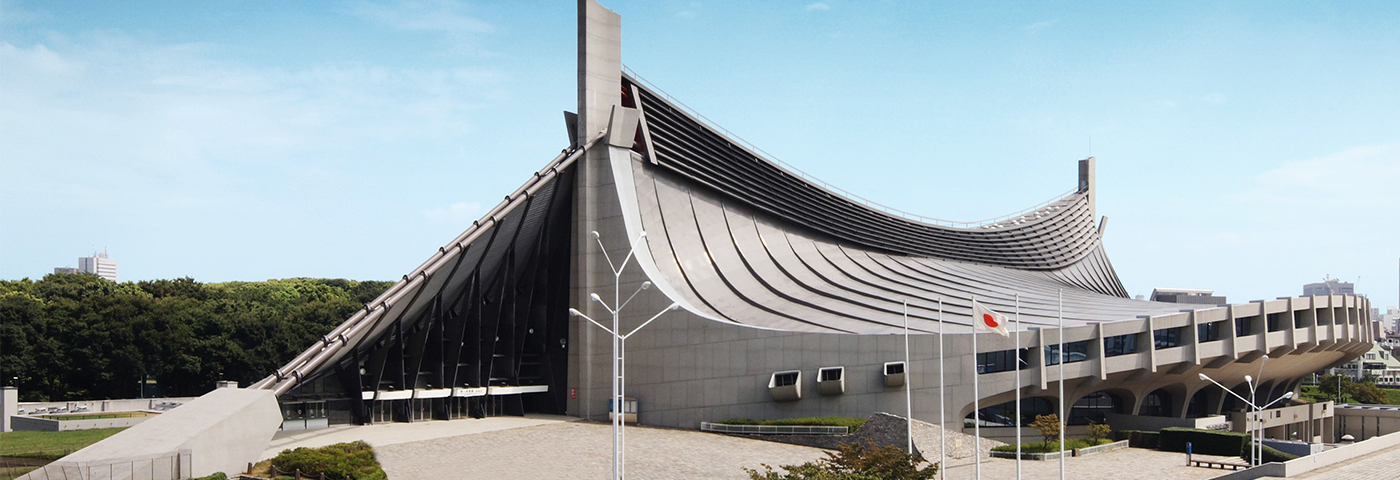
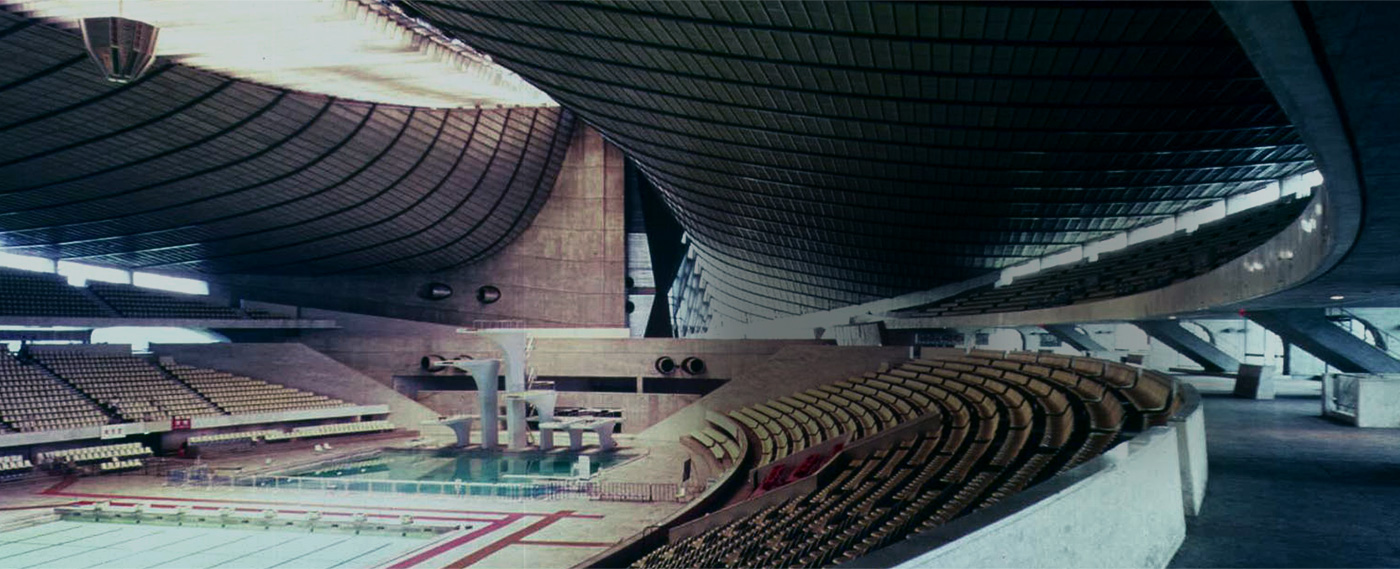
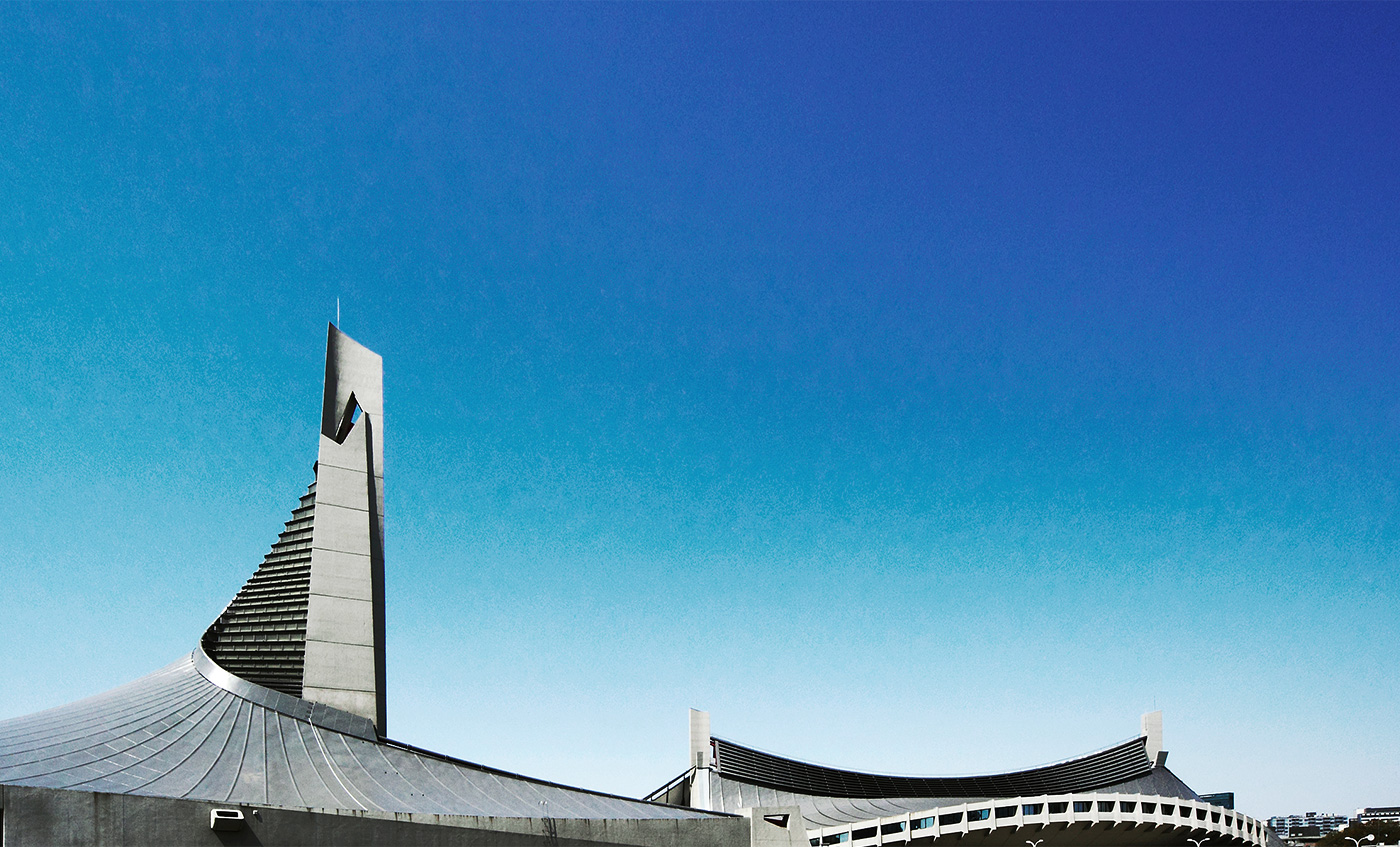
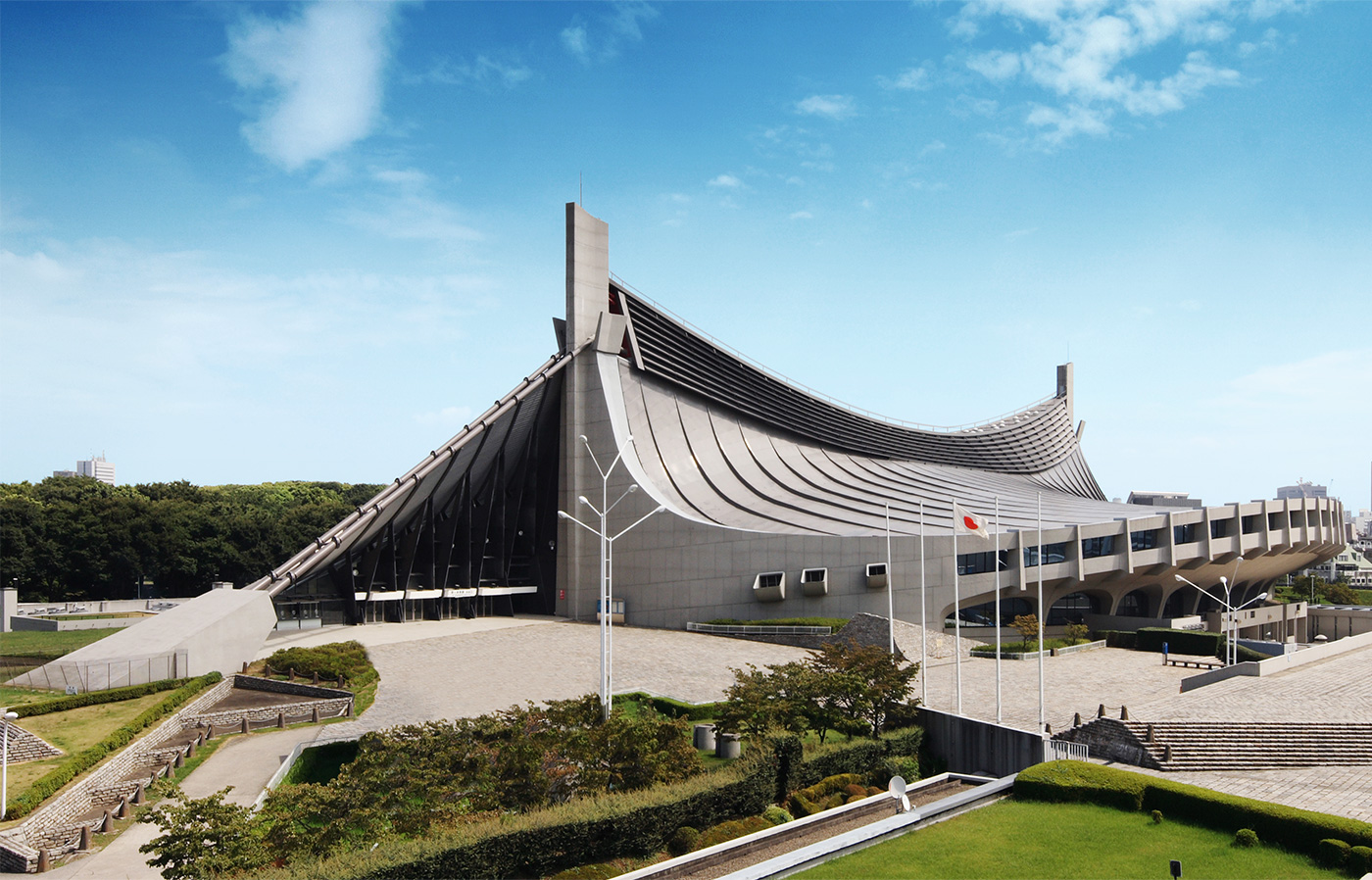
If the epoch-making Tokyo Olympics propelled postwar Japan into its period of high growth, Yoyogi National Gymnasium remains a testament to its triumphs. Executive Vice President Tomohiro Kimura says, “In the design, Kenzo Tange placed importance on dynamism, of course, but more than that, he prioritized creating a building the provided a sense of unity. He believed that unifying athletes’ performances and spectators’ support would result in the creation of a grand space suitable for the event. When considering the kind of building that would achieve that, Kenzo Tange’s conclusion was that it should be a space that enveloped the athletes and spectators as one without pillars as visual obstacles. When the Olympics are held, thousands, or tens of thousands of people, come and go in and out of a venue. By staggering the location of entrances and exits in the building, we could facilitate the flow and achieve smooth movement.”
戦後を乗り越え、日本が高度成長期に突入したときのエポックメイキングが東京オリンピックだとしたら、その偉業を今に伝える建物が国立代々木競技場だ。副社長の木村は言う。「設計にあたり丹下健三は、建築物としてのダイナミズムはもちろんですが、それ以上にこだわったのが一体感でした。選手のパフォーマンス、観客の応援、それがひとつになったときに、祭典にふさわしい素晴らしい空間が生まれると考えたのです。ではそれにふさわしい建物はどのようなものか?丹下健三の結論は、選手と観客を一体にするように包み込む無柱空間でした。オリンピック開催時は、何千、何万の人が出入りします。その流動性を確保することも重要なテーマだったのですが、入り口と出口をずらすことにより出入りがスムーズになり、人の流れを生み出すという機能性も併せもつこともめざしたのです」
Record-breaking, unprecedented challenge to create a suspension roof structure.
前代未聞、史上初となる吊り構造への挑戦。
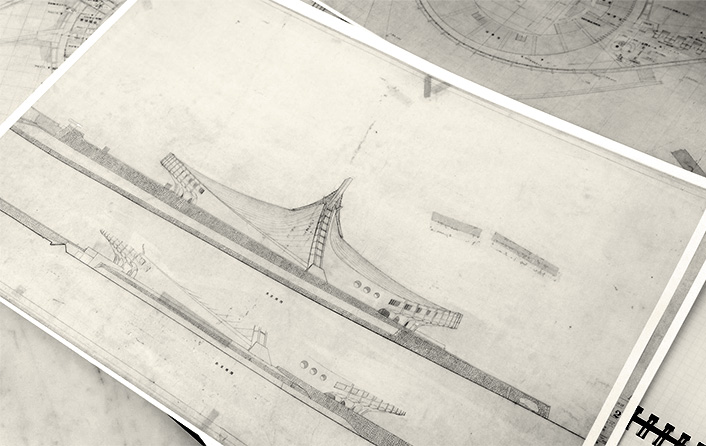
A sense of unity develops the moment that athletes and spectators share passion inspired by the athlete’s performance. In a building that seeks to promote a sense of unity, anything that stands in the way becomes an obstacle to achievement of that aim. Kimura continues, “Kenzo Tange believed that the existence of pillars would obstruct the link between the athletes and specatators, so the response that he came up with was to design a roof with a cable structure. Suspending the roof by tension to achieve a large space. This system was typically used for bridges, but no one had ever attempted to use a suspension structure over such a large space in a building. Kenzo Tange was fully motivated, but for the staff at the time, it was a first, and they said it was a challenge that required a fair amount of courage.”
一体感とは、その一瞬に、選手も観客もすべての人が熱中することだ。一体感を追求した建物の場合、それに水を差すものは不要になる。木村はこう続ける。「柱の存在も一体感の妨げになると丹下健三は考え、導き出した回答が屋根を吊り構造にする設計。引っ張る力により屋根を吊り、大空間を実現するものです。橋などの設計では一般的なものでしたが、施設、それもこれほど巨大な大空間の屋根を吊り上げる建築物はどこにもありませんでした。丹下健三はやる気満々だったそうですが、当時のスタッフは初めてづくしのことなので、かなり勇気のいる挑戦だったと言っていました」
Overcoming a short construction schedule with a sense of unity.
工期の短さを、一体感で乗り越える。
Of course, it was a challenge to construct a building with no example anywhere in the world. However, this was not the reason that the team considered it a challenge that required courage. The reality of the situation was that the construction schedule was only 18 months. Kimura says the following about that time: “It was a schedule that we would never be able to achieve today. However, it became apparent to Kenzo Tange that this was the only solution. It is said that our team and the construction company staff worked hardly sparing time for sleep.”
Kimura continues, “This was true to the extent that, on New Year’s Eve that year, the TV program Yukutoshi Kurutoshi (The Old Year and the New Year) which is shown after the traditional Kohaku Utagassen singing competition, reported that the stadium construction site was the only place where people were still working. I have also heard that they faced numerous problems during construction that they had never faced before. I think that Kenzo Tange as well as the team and the people from the construction company must have confronted these obstacles with the strong conviction that they had to make the Tokyo Olympics a success. Their strong teamwork and enthusiasm united everyone in purpose from the early planning and design stages through construction and completion.”
手本となるものが世界のどこにもない建築構造への挑戦。しかしスタッフが勇気のいる挑戦だったと思った理由はそれだけではなかった。工期が500日ほどしかなかったのだ。木村は当時のことをこう言う。「現代なら絶対実現できない工期です。しかし設計は丹下健三が考えに考えてこれしかないと言ったものです。スタッフも、施工会社の方も、寝る間を惜しんで取り組んだといいます。その年の大晦日、『紅白歌合戦』のあとの『ゆく年くる年』で、あそこだけは工事を行っていますと放送したほど。また、施工中は、経験したことのない数多くの問題に遭遇したと聞いています。立ちはだかる問題に対峙し、乗り越えることができたのは、丹下健三もそうだし、スタッフも、施工会社の方もそうだったと思うのですが、なんとかして東京オリンピックを成功させるんだという熱い想いがすべての人にあったからでしょう。プランニング、デザインの段階から、施工、完成へいたるまで、そんな一体感ができていたのです」
Considering completion to be a beginning rather than an end.
完成は終わりでなく、始まりと考える。
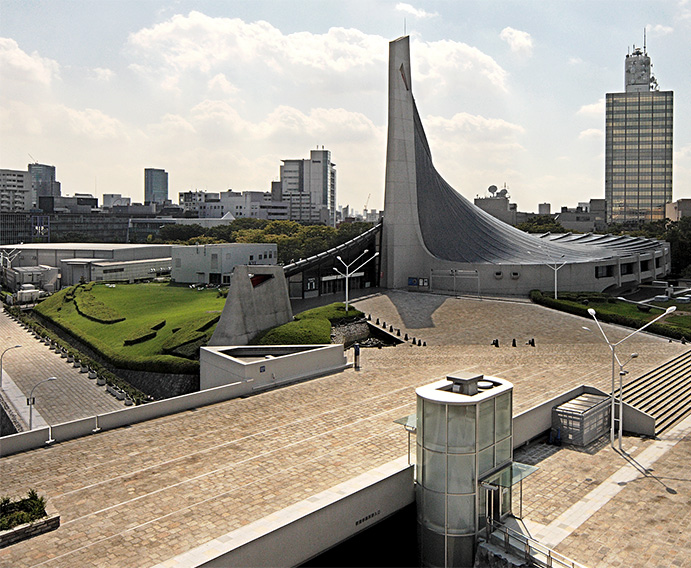
Kimura says, “It is a big mistake to think that architecture is something that is finished once a building is completed. Just as humans require maintenance as they age, it is important to regularly maintain buildings so that they are long-lasting.” He says that, for Tange Associates, which has built several historical buildings, there are now many opportunities to be involved in plans for preservation or redevelopment of older buildings. “Repairs include seismic retrofit, update of function, and repairs to interior and exterior deterioration. We have also conducted large-scale repair at Yoyogi National Gymnasium, including painting the entire roof and exterior repairs, refurbishment for accessibility, and improvements in earthquake resistance. The original pavement at Yoyogi National Gymnasium was cobblestone and had an uneven surface. At the time, not much consideration was given to accessibility. However, things are different now. A special lane made of even stone was created for wheelchair users. We replaced each stone, grinding it down to be flat. It is delicate work: if the stones are ground too much, the texture is damaged. So we ground them carefully to preserve the effect that Kenzo Tange intended. As symbolized by this cobblestone pavement, Tange Associates believes that it is important to not only restore the building to its original state as intended by Kenzo Tange but also to think about the building’s value and to create living architecture that can continue to be used into the future. For Tange Associates, the completion of a building is not the end; it is the start of work to maintain it and pass it on to future generations. This is precisely the process of passing on TANGE DNA to future generations. This is the meaning of TANGE DNA+.”
建築とは建物ができあがったら終わる仕事だと思ったら、それは大きな間違いだという。人間でも年を重ねていくとメンテナンスが大切になるように、末長く維持していくには建築物にも手をほどこすことは重要。特に数々の歴史的建造物を造ってきたTANGE建築都市設計の場合、その保存や再整備にかかわる計画に携わる機会が増えてきたと木村は言う。「改修の内容は耐震補強、機能更新、外装・内装の劣化補修などさまざまです。国立代々木競技場でも、これまでに屋根の全面塗装や外装の改修、バリアフリーへの改修や耐震性の向上など、大規模な改修を行ってきました。国立代々木競技場の歩道は石畳ですが、完成当時はけっこうでこぼこしたものでした。その当時はバリアフリーという考えがあまり浸透していませんでした。しかし今は違います。石を1枚1枚剥がしてグラインダーで平に削って張り直しました。削り過ぎると風合いが損なわれるので、丹下健三がめざした雰囲気を残しながら丁寧に削っていきました。この石畳が象徴するように、改修計画にあたってはTANGE建築都市設計が大切にしていることは、単に元の形に復元するということだけではなく、その建築の価値がどこにあるかを考え、丹下健三がその建築に込めた意図を大切にしながらこれからも活用されつづける生きた建築として整備していくことが大切だと考えています。TANGE建築都市設計にとって、建物の完成は終わりではなく、それを維持し、次代へ伝えていく仕事の始まりであり、そしてそれはTANGE DNAを次の世代へ伝えていくことに他なりません」
A venue that puts athletes first.
アスリートファーストの競技場を。
Tange Associates is in charge of designing the swimming venue, or “Olympic Aquatics Center”, for the 2020 Tokyo Olympics. In 1960, it was Kenzo Tange, and in 2020, it is Chairman Paul Tange, who is responsible for the design. Principal Architect Masaki Nakayama says that Chairman Tange is also aiming for a design with a sense of unity but the circumstances are different from those of Kenzo Tange. “We thought about the nature of the Olympics and what kind of space would be required to represent the Olympics, Japan, and Tokyo. I think these considerations are the same as those in Kenzo Tange’s time. However, we have proposed a plan that also considers the future of the building. Yoyogi National Gymnasium is currently used as a venue for events. The swimming venue that Chairman Tange is working on is being designed to be used as a legacy after the Olympics are over.” Nakayama explains that Chairman Tange is working on a design that puts athletes first. “The nature of the Olympics differs according to the times and this influences the architecture but, no matter what the era, athletes and spectators unite and together develop a great sporting event. This is why together with Chairman Tange we actually met with a number of Olympic medalists to interview them about features make a pool easy to use versus those that are not. Backstroke swimmers said that if ceiling lines were not clear, their sense of direction becomes dulled and it is more difficult to gauge distance, whereas crawl and breaststroke swimmers told us that they got better results if they felt that the end of the pool close to them.”
Nakayama continues, “Spatial design also influences results. We worked on incorporating these opinions into the design. We want the athletes to achieve the best results possible. Our priority of putting comfort first results in a design that puts athletes first. The Olympic Aquatics Center will not be completed for a while yet, but we hope that you will look forward to seeing the kind of space that will be created, how a sense of unity will emerge, and the kind of drama that will unfold from within it.”
TANGE建築都市設計は、2020年東京オリンピックの水泳競技会場となる施設の設計も担当している。1964年の東京オリンピックのときが丹下健三。2020年の東京オリンピックは丹下憲孝が設計にあたる。丹下憲孝もまた、一体感のある設計をめざしているけれど、丹下健三のときとは事情が違うと設計部の中山は言う。「オリンピックのあり方から考え、オリンピックらしさ、日本らしさ、東京らしさを踏まえた空間とはどのようなものかを考えました。これは丹下健三の時代も同じだったと思うのです。しかし私たちはさらにプラスして、建物のその後も考えたプランを提案しています。『国立代々木競技場』は、現在、イベント会場としても利用されています。丹下憲孝が手がける水泳競技場も、オリンピックが終わってからもレガシーとして使える空間デザインをめざして設計にあたっています」
また、今回、丹下憲孝は「アスリートファースト」の設計に取り組んだと中山は言う。「時代が違えばオリンピックのあり方も変わり、それは建築にも影響は及ぶのですが、どんな時代であっても競技場に求められるのは、アスリートと観客が一体となって、その結果、すばらしい試合が展開されることです。ですから丹下憲孝と私たちは、実際に、何人ものオリンピックメダリストに会って、使いやすいプールと使いにくいプールの違いについてヒアリングをしました。背泳ぎのアスリートは天井のラインがシャープでないと方向感覚が鈍って距離感がわかりにくくなると言い、クロールや平泳ぎのアスリートは、プールの壁面が近く感じるといい結果がでると教えてくれました。空間設計が記録にも影響を及ぼすのです。そんな意見を設計へ落とし込む作業を行いました。アスリートには少しでも好記録を出してほしい。そのための設計を考えることこそ、それはアスリートファーストの設計になります。『カタチ、そして心地』という考えは、競技場の設計においては「アスリートの心地」として踏襲されています。『オリンピックアクアティクスセンター』の完成はまだ先になりますが、どのような空間が誕生して、そこでどのような一体感が生まれ、どのようなドラマが展開されるか、期待していただきたいですね」
Other Project Stories
-
éclat Club and Resort, Huizhou
エクラットクラブ & リゾート
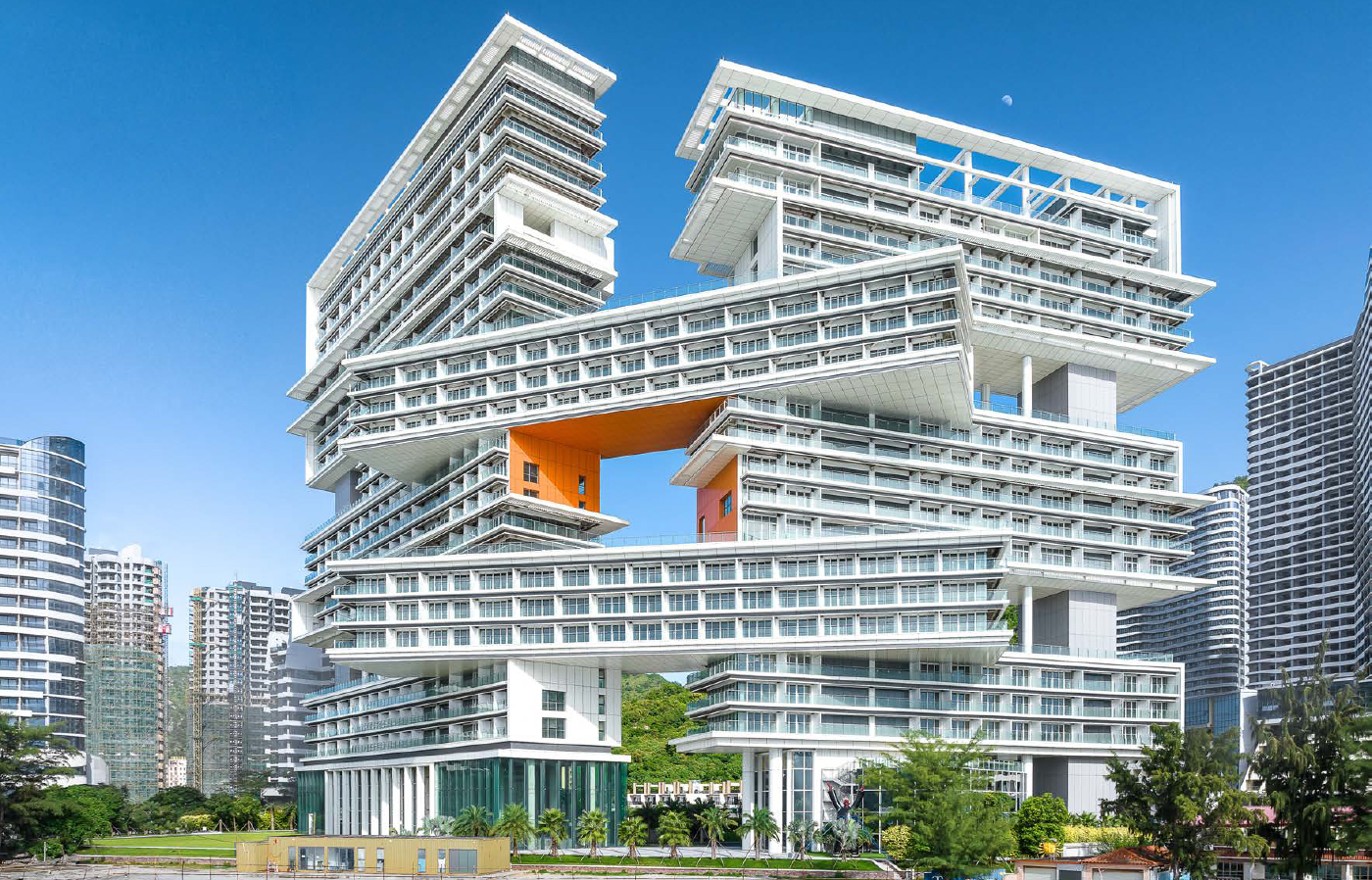
A Gateway to an Unprecedented Resort Experience
かつてないリゾート体験へのゲート
-

-
University of Bahrain
バーレーン大学
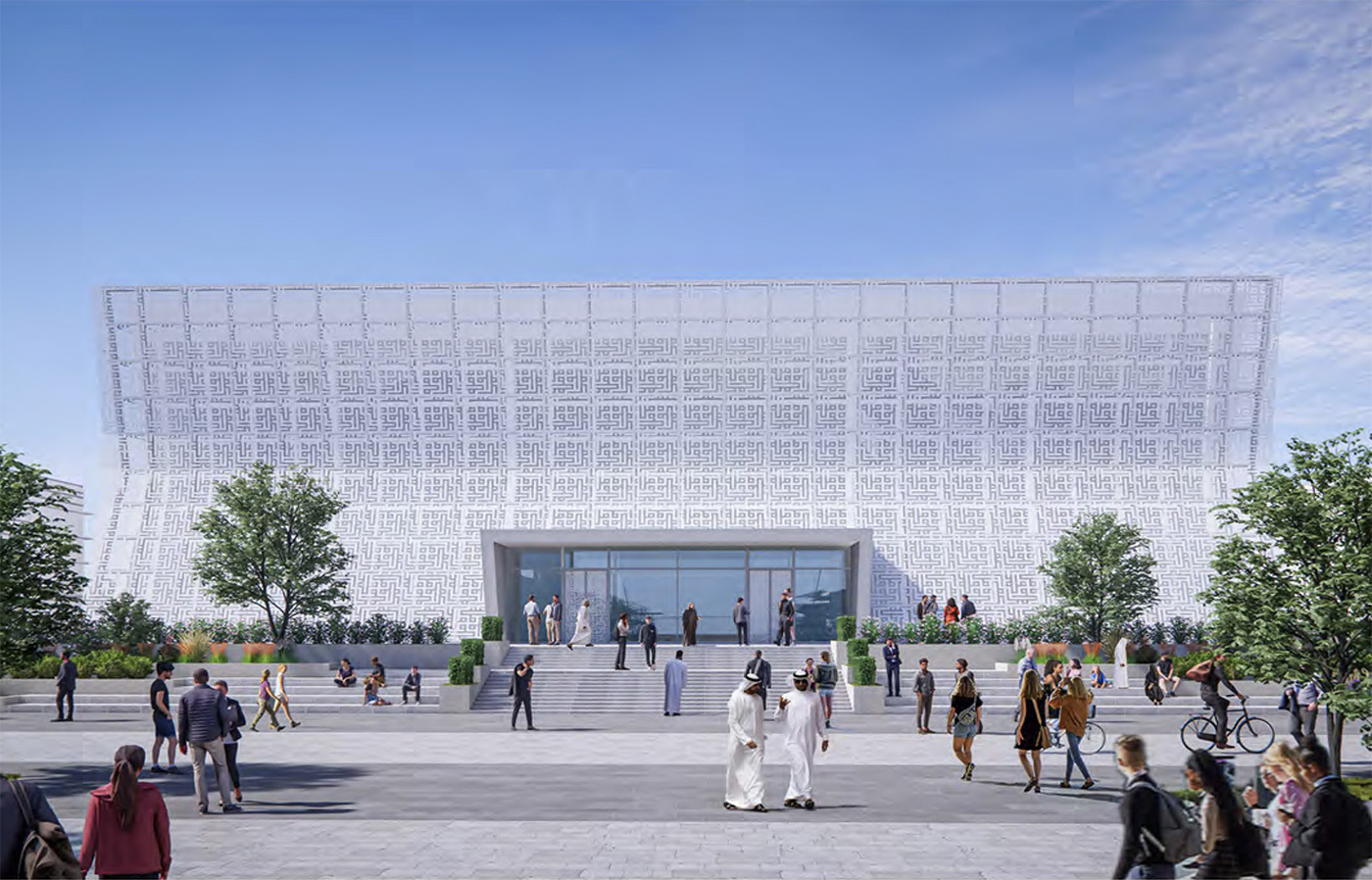
Beyond Architecture: Designing the Future of a University
建築の枠を超え、大学が進むべき未来を設計
-
-
Orchard Gateway
オーチャードゲートウェイ
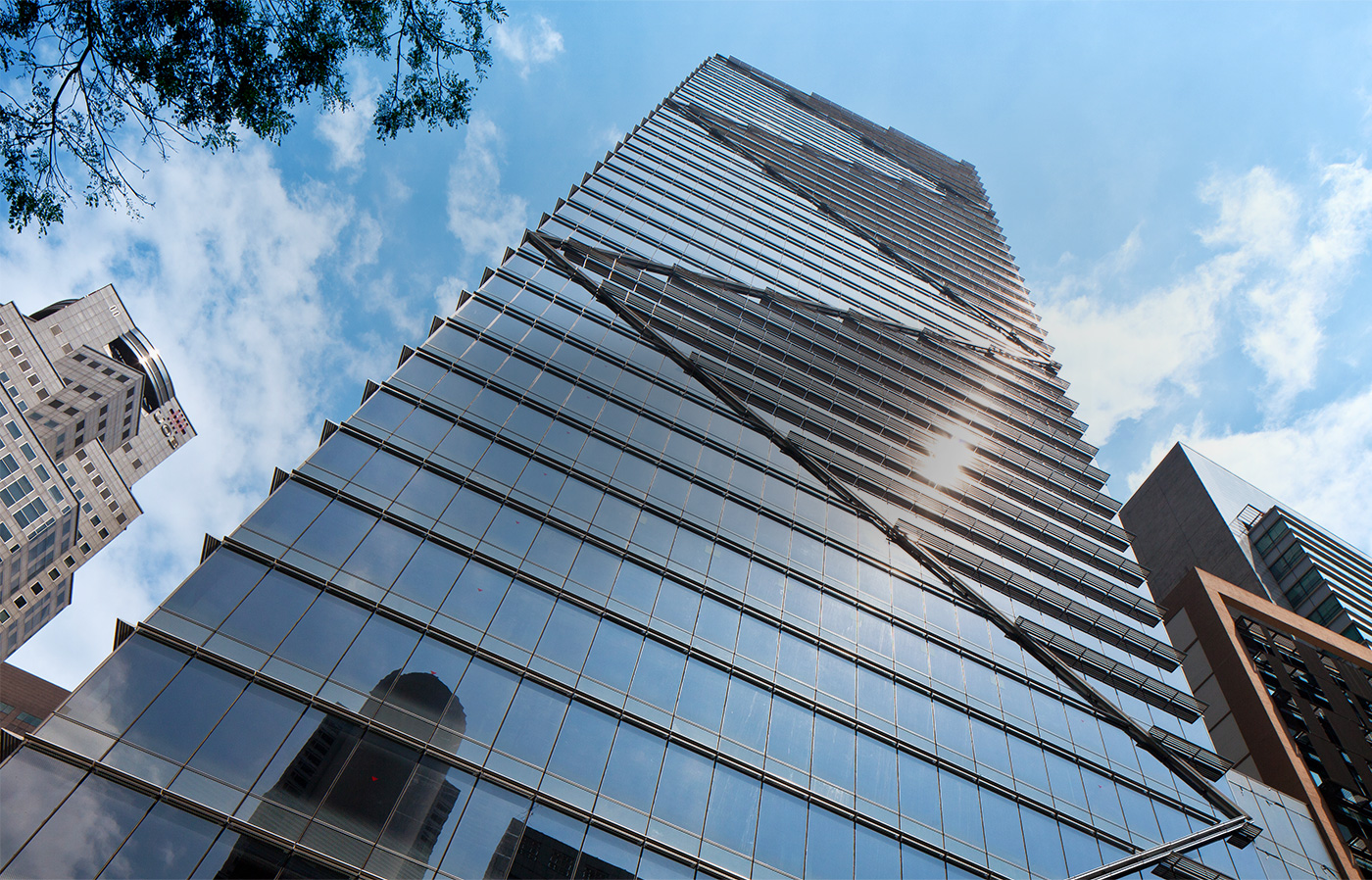
A bridge for people, a bridge to the next generation
人の架け橋となり、次代への架け橋となる
-

Mode Gakuen Cocoon Tower
モード学園コクーンタワー
A Response to the Request for a Building Like No Other
見たこともない建物を、というオーダーへの回答
-
Yoyogi National Gymnasium
国立代々木競技場(旧国立屋内総合競技場)
Dynamism and integration born of an unprecedented challenge
史上初への挑戦が、ダイナミズムと一体感を生み出した
-
Rikuzentakata City Community Hall
陸前高田市コミュニティホール
Designing hope for recovery and usability
復興の希望と、使い勝手のよさをデザインする